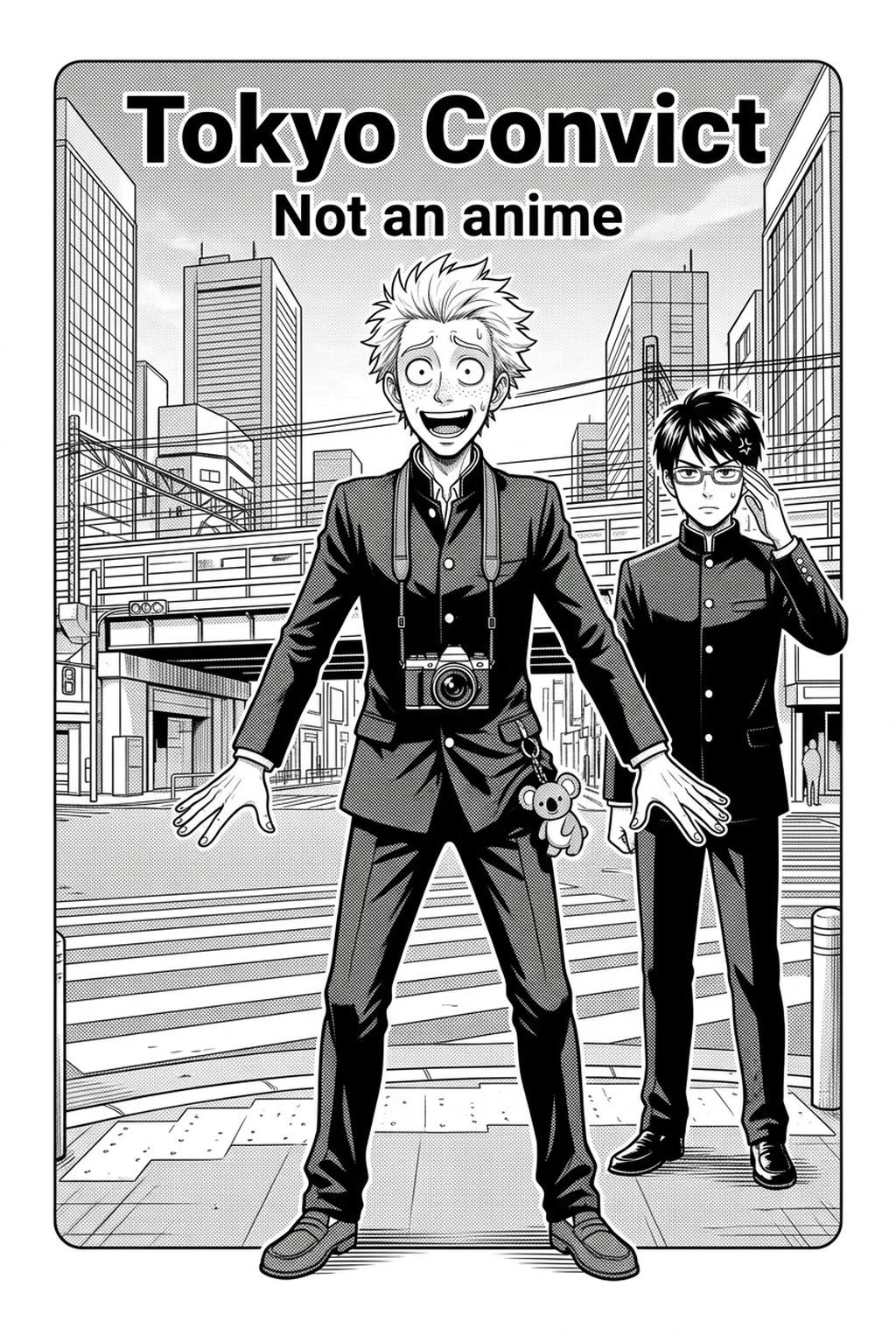
AI Manga Speech Bubble Layout: Core Principles of Bubble Composition
Effective placement relies on the 'Z-pattern' of reading flow, ensuring dialogue precedes action or follows character reactions logically. Your goal is to guide the reader across the page without forcing them to hunt for the next speaker in a crowded sequence of panels.
Avoid the 'art-block' trap by placing balloons along the negative space of a panel rather than directly over faces or focal points. If a character is performing a high-intensity action, like a Shonen power-up, the dialogue balloon should anchor to the corner of the panel, leaving the center open for dynamic line weights and impact lines.
Maintain consistent tail direction to ensure the reader always knows which character is speaking, even in crowded action sequences. A common mistake is crossing tail paths, which creates visual confusion and immediately breaks reader immersion. Always point the tail toward the speaker's mouth, but offset it slightly to prevent the balloon from appearing to "grow" out of their head.
Why Precision Affects Reader Engagement
Improper placement creates 'readability friction,' where the audience becomes confused about who is speaking or in what order to read. This friction is particularly damaging in high-octane Shonen scenes where the visual stakes are high and pacing must remain rapid.
Dynamic balloon placement can mimic the intensity of a fight, whereas rigid, square layouts are better suited for Seinen character dramas. Use tight, irregularly shaped bubbles to convey urgency or panic, and reserve large, rectangular containers for expository narration or grounded, calm scenes.
Professional manga standards demand that text remains legible even when shrunk for mobile devices or digital platforms. If your bubbles are too small, the text becomes illegible when viewed on a smartphone screen; if they are too large, they bleed into the gutter and distract from the character art. Aim for a font-to-balloon ratio that occupies no more than 40% of the total panel area.
Enhancing Workflows with Mangaka
AI Manga Speech Bubble Layout tools analyze panel content to identify optimal 'safe zones' that preserve character art and impact lines. By offloading the repetitive, frame-by-frame adjustment process, you can maintain a consistent aesthetic across 20-page chapters while focusing your time on the final inking and tone density.
The software understands the nuance of character hierarchy, prioritizing placement to ensure lead characters are always linked correctly to their dialogue. Unlike manual placement, which often requires multiple undo-redo cycles to find a non-obstructive path, the AI detects the "focal center" of your inked characters. It then computes the most logical anchor points that avoid line-weight drift, ensuring that your carefully crafted expressions are never masked by a poorly placed text container.
| Production Phase | Manual Labor | AI-Driven Efficiency |
|---|---|---|
| Storyboard | High (Layout testing) | Low (Instant placement) |
| Inking | High (Masking around text) | Low (Safe-zone detection) |
| Export/Review | Medium (Correction passes) | Minimal (Final check) |
Visit manga speech bubble placement with Mangaka to see how these automated adjustments preserve the integrity of your panels, allowing you to bypass the manual labor of resizing and shifting balloons for every individual frame. This keeps the review focused on story intent, line weight, panel readability, and the export quality behind the final AI Manga Speech Bubble Layout output.
Practical Use Cases and Layout Limits
Avoid 'bubble clutter' by balancing text density; if a panel requires too much exposition, consider splitting the dialogue across two distinct visual frames. Never cross tail paths, as this creates visual confusion that immediately breaks reader immersion. Ensure consistent padding between the balloon edge and the text so that the dialogue does not feel cramped or 'suffocated' by the bubble frame. A good rule of thumb is a 10-point margin from the text boundary to the inside edge of the balloon. If you are dealing with dense, long-winded dialogue, break the text into smaller, sequential balloons to avoid overwhelming the reader, a technique commonly used in modern web-serialization formats.
When dealing with three or more characters, use varied balloon heights to denote the "height" of the voice in the hierarchy of the conversation. If Character A is higher in the hierarchy or louder, their balloon should be slightly larger or placed closer to the top-right of the Z-pattern flow.
Beginning Your Journey with Mangaka
Starting your manga project with the right layout mindset ensures you aren't fighting your own art during the final stages of production. Many creators wonder whether they should place speech bubbles before or after drawing the characters; it is best to place them during the initial sketching phase to guarantee there is adequate space for the narrative.
- Can AI placement replace manual lettering completely? AI provides a high-quality foundation that allows creators to make final, artistic tweaks in seconds, significantly reducing the initial layout work. 2. What is the most effective way to handle long dialogue in manga? Break it into smaller, sequential balloons to avoid overwhelming the reader and to better align with the natural Z-pattern eye-tracking. 3. How do I prevent bubbles from covering important character features? Prioritize the "negative space" in your panel composition during the sketching phase so that your AI-assisted layout has clear areas to anchor the dialogue. 4. Is it better to prioritize flow over artistic aesthetics in action scenes? They must be balanced; however, in action-heavy scenes, readability takes precedence, meaning your layout must allow for clear, uninterrupted reading of character interactions.
The Bottom Line
Mastering AI Manga Speech Bubble Layout workflow is a technical necessity that bridges the gap between raw art and a professional-grade manga experience. By leveraging AI-driven layout tools like Mangaka, creators can save hours of production time while ensuring their dialogue flow meets industry-standard readability expectations. manga speech bubble placement to see how professional-grade automation can elevate your finished pages.
Related articles
Mastering Manga Storyboard Layout: A Guide for 2026
Manga Storyboard Techniques for Professional Flow in 2026
7 Essential Manga Storyboard Tips for Pacing Your Story 2026
Frequently Asked Questions
What should creators check when using manga speech bubble placement?
How does Mangaka AI Manga Speech Bubble Layout support manga speech bubble placement?
What input makes the generated page easier to review?
When should creators edit the generated page manually?
Optimize Manga Dialogue Flow and Balloon Layouts with Mangaka.app
Effective speech bubble placement guides the reader’s eye naturally along the Z-path while preserving key visual focal points and emotional beats. Mangaka.app elevates balloon typography:
- Intuitive Z-Pattern Flow Alignment: Arrange speech balloons seamlessly along natural Japanese reading trajectories to avoid visual collisions.
- Dynamic Dialogue Balloon Morphing: Generate standard ovals, spiky exclamation bursts, and soft whisper bubbles that auto-scale to text.
- Automated Tail Positioning: Connect balloon tails precisely to speaking characters without obscuring crucial facial reactions.
- Multi-Language Typography Engine: Support vertical Japanese kanji typography as well as horizontal Western lettering with optimal kerning.
For mangaka, comic illustrators, and indie webtoon teams looking to streamline their production pipeline, Mangaka.app delivers an end-to-end AI creation suite with consistent character model generation, intuitive komawari panel layouts, and print-ready 600 DPI rendering.