Storyboarding Complex Fight Sequences: Perspective and Motion Lines in Modern Webtoons
Designing professional manga and webtoons requires mastering narrative structure, dynamic visual pacing, and precise draftsmanship. Whether you are illustrating tender emotional beats or choreographing high-octane battle sequences, understanding core aesthetic conventions allows your visual storytelling to resonate deeply with modern digital readers across the globe.
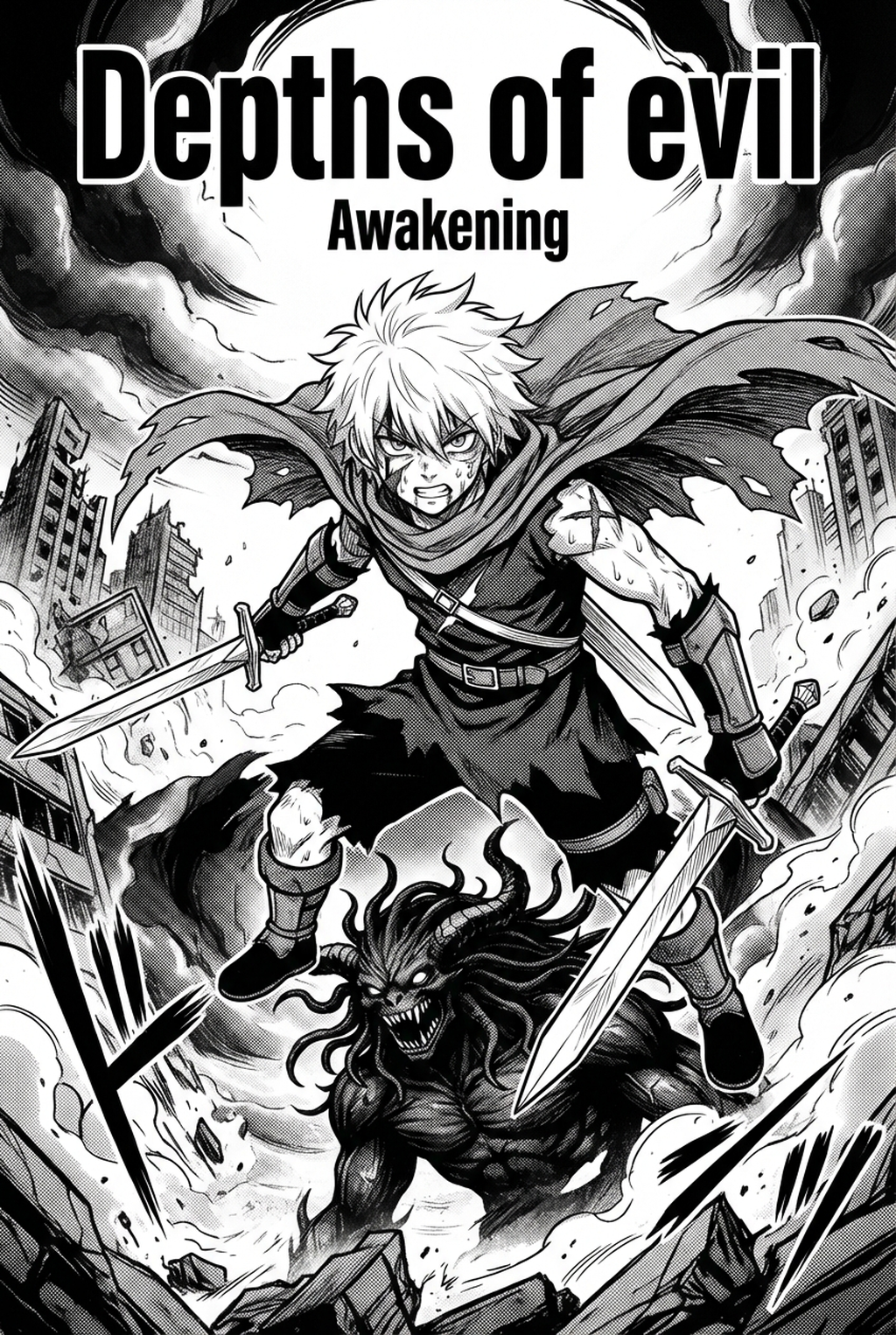
<img src="https://media.doctranslate.io/mangaka/mangaka/009189dd-5eaf-4775-8335-433618ec76b6/0.png?X-Amz-Algorithm=AWS4-HMAC-SHA256&X-Amz-Credential=qa0e1UFJ0Trmajw8ttCM%2F20250523%2Fus-east-1%2Fs3%2Faws4_request&X-Amz-Date=20250523T002033Z&X-Amz-Expires=604800&X-Amz-SignedHeaders=host&X-Amz-Signature=a838a5a7c83a5f64ea5479bb2882f238dce85566e361e5eb29c170b00195f476" alt="Storyboarding Complex Fight Sequences: Perspective and Motion Lines in Modern Webtoons - Cover Artwork" style="max-width:100%; height:auto; border-radius:8px; margin:20px 0;" /> <p style="text-align:center; font-size:0.9em; color:#666;">Artwork: <em>Mangaka Original</em> by Featured Creator — <a href="https://www.mangaka.app/en/story/504" target="_blank" rel="noopener">Explore on Mangaka Discovery</a></p>
Table of Contents
- Core Principles and Visual Definition
- Anatomy, Geometry, and Technical Construction
- Lighting, Depth, and Tone Separation
- Step-by-Step Production Workflow for Digital Creators
- Common Mistakes and Professional Troubleshooting
- Frequently Asked Questions (FAQ)
- Conclusion and Next Steps
Core Principles and Visual Definition
What are the foundational aesthetic principles behind storyboarding complex fight sequences and webtoon action dynamics?
The foundational aesthetic principles behind storyboarding complex fight sequences and webtoon action dynamics combine precise anatomical framing with deliberate emotional resonance to immediately communicate character motivation and narrative tension to readers within a single glance. By harmonizing focal contrast, dynamic silhouette contouring, and purposeful composition, digital manga artists establish an immersive reading experience that seamlessly guides visual flow across modern screens and printed layouts.
Visual storytelling thrives on clear intent and purposeful design choices. When developing storyboarding complex fight sequences and webtoon action dynamics, artists must establish a coherent grammar that balances classic hand-drawn sensibilities with modern digital production efficiency. In contemporary manga production workflows, mastering this balance ensures your artwork stands out amidst millions of digital comics published on platforms like Mangaka Discovery .
<img src="None" alt="Anatomical drafting and foundational guidelines for storyboarding complex fight sequences and webtoon action dynamics" style="max-width:100%; height:auto; border-radius:8px; margin:20px 0;" /> <p style="text-align:center; font-size:0.9em; color:#666;">Panel Reference: <em>Mangaka Studio</em> by Artist — <a href="https://www.mangaka.app/en/story/1907" target="_blank" rel="noopener">View Story Scene</a></p>
To properly structure visual narrative elements, creators frequently utilize specialized tools available on Mangaka Studio . The visual syntax relies on three pillar concepts:
- Focal Dominance: The human eye instinctively gravitates towards areas of highest tonal contrast and sharpest contour density. Establishing primary, secondary, and tertiary focal nodes within each panel ensures that the viewer absorbs critical story information before processing background environment textures.
- Dynamic Pacing: The tempo of your sequence dictates reader heart rate. Expanding vertical gutter spacing or employing expansive double-page spreads decelerates time, providing breathing room for character contemplation. Conversely, tight diagonal cuts and overlapping frame boundaries accelerate narrative momentum during tense interactions.
- Emotional Clarity: Every mark on the digital canvas must reinforce character psychology. Subdued highlights and heavy cross-hatching evoke isolation and melancholy, whereas sparkling multi-faceted highlights and expressive white space convey euphoria, wonder, and unyielding determination.
Cognitive Perception of Visual Syntax in Sequential Comics
The human cognitive architecture processes visual information at vastly higher speeds than alphanumeric text. When a reader scans a sequential comic layout, the visual cortex decodes spatial orientation, emotional posture, and depth hierarchies in less than one hundred milliseconds. Because of this physiological reality, sequential comic creators bear the responsibility of constructing frictionless visual paths that avoid cognitive fatigue.
In professional Japanese manga production and global digital webtoon creation, visual syntax functions as an invisible grammar. Panel gutters operate as temporal pauses; border line weights indicate narrative proximity; and diagonal panel cuts signal instantaneous velocity. By structuring these graphic variables with rigorous discipline, an author orchestrates not merely what the reader sees, but precisely how the reader feels at each incremental story beat.
Consider the phenomenon of closure in comic art. As conceptualized by visual theorists, closure represents the imaginative leap where the observer synthesizes two discrete, motionless images into continuous temporal motion. In a battle manga, the creator rarely illustrates every microscopic degree of an arm swinging a blade. Instead, the narrative displays the anticipatory windup in panel one, followed immediately by the devastating aftermath impact in panel two. The reader's cognitive imagination bridges the gutter space, generating an internal sense of velocity and impact power far more visceral than any hyper-detailed intermediate illustration could achieve.
Psychological Staging and Reader Empathy Dynamics
Visual empathy relies on universal facial coding systems and body language micro-expressions. Psychologists have long documented how the human autonomic nervous system mirrors observed emotional states through mirror neurons. When a manga character exhibits dilated pupils, quivering highlights, and subtle eyelid tension, the reader subconsciously reproduces those micro-tensions, forging an intimate psychological communion with the fictional persona.
In high-stakes narrative arcs, creating emotional resonance demands that internal turmoil manifests through external physical draftsmanship. Rather than relying exclusively on expositional internal monologue balloons, masters of visual narrative manipulate ambient values, weather metaphors, and perspective distortions. A character overwhelmed by grief may be depicted from an extreme overhead birds-eye perspective, isolated inside an expansive sea of empty white paper, visually reinforcing utter abandonment and existential insignificance.
Conversely, moments of triumphant realization or sudden epiphany demand expansive framing where dynamic speed lines radiate outward from the character's brow or chest. These graphic devices do not merely decorate the drawing; they externalize psychic energy, allowing abstract psychological transformations to register as tangible physical forces within the graphic universe.
Cognitive Perception of Visual Syntax in Sequential Comics
The human cognitive architecture processes visual information at vastly higher speeds than alphanumeric text. When a reader scans a sequential comic layout, the visual cortex decodes spatial orientation, emotional posture, and depth hierarchies in less than one hundred milliseconds. Because of this physiological reality, sequential comic creators bear the responsibility of constructing frictionless visual paths that avoid cognitive fatigue.
In professional Japanese manga production and global digital webtoon creation, visual syntax functions as an invisible grammar. Panel gutters operate as temporal pauses; border line weights indicate narrative proximity; and diagonal panel cuts signal instantaneous velocity. By structuring these graphic variables with rigorous discipline, an author orchestrates not merely what the reader sees, but precisely how the reader feels at each incremental story beat.
Consider the phenomenon of closure in comic art. As conceptualized by visual theorists, closure represents the imaginative leap where the observer synthesizes two discrete, motionless images into continuous temporal motion. In a battle manga, the creator rarely illustrates every microscopic degree of an arm swinging a blade. Instead, the narrative displays the anticipatory windup in panel one, followed immediately by the devastating aftermath impact in panel two. The reader's cognitive imagination bridges the gutter space, generating an internal sense of velocity and impact power far more visceral than any hyper-detailed intermediate illustration could achieve.
Psychological Staging and Reader Empathy Dynamics
Visual empathy relies on universal facial coding systems and body language micro-expressions. Psychologists have long documented how the human autonomic nervous system mirrors observed emotional states through mirror neurons. When a manga character exhibits dilated pupils, quivering highlights, and subtle eyelid tension, the reader subconsciously reproduces those micro-tensions, forging an intimate psychological communion with the fictional persona.
In high-stakes narrative arcs, creating emotional resonance demands that internal turmoil manifests through external physical draftsmanship. Rather than relying exclusively on expositional internal monologue balloons, masters of visual narrative manipulate ambient values, weather metaphors, and perspective distortions. A character overwhelmed by grief may be depicted from an extreme overhead birds-eye perspective, isolated inside an expansive sea of empty white paper, visually reinforcing utter abandonment and existential insignificance.
Conversely, moments of triumphant realization or sudden epiphany demand expansive framing where dynamic speed lines radiate outward from the character's brow or chest. These graphic devices do not merely decorate the drawing; they externalize psychic energy, allowing abstract psychological transformations to register as tangible physical forces within the graphic universe.
Anatomy, Geometry, and Technical Construction
How do professional artists construct the underlying anatomical and geometric framework?
Professional artists construct the anatomical and geometric framework by mapping out three-dimensional primary volumes—spheres, cylinders, and planar wedges—before committing to detailed surface contours or decorative stylistic line art. Establishing a clear perspective horizon line and aligning facial cross-contours ensures structural consistency across dynamic angles, emotional shifts, and rapid sequential panels.
Before rendering fine details, you must discipline yourself to respect underlying spatial volume. Characters exist inside a three-dimensional narrative world; their features, eyes, gestures, and dynamic poses must bend convincingly around cylindrical surfaces and perspective planes.
<img src="None" alt="Geometric construction and facial alignment techniques in digital manga" style="max-width:100%; height:auto; border-radius:8px; margin:20px 0;" /> <p style="text-align:center; font-size:0.9em; color:#666;">Panel Reference: <em>Manga Creation</em> by Mangaka — <a href="https://www.mangaka.app/en/story/1907" target="_blank" rel="noopener">Inspect Original Panels</a></p>
For comprehensive technical drawing standards, artists regularly consult authoritative references such as the Smithsonian Design Guidelines and classic academic anatomy principles documented by the Metropolitan Museum of Art . Merging these historic academic principles with contemporary manga aesthetics produces artwork that is simultaneously anatomically sound and visually captivating.
Cognitive Perception of Visual Syntax in Sequential Comics
The human cognitive architecture processes visual information at vastly higher speeds than alphanumeric text. When a reader scans a sequential comic layout, the visual cortex decodes spatial orientation, emotional posture, and depth hierarchies in less than one hundred milliseconds. Because of this physiological reality, sequential comic creators bear the responsibility of constructing frictionless visual paths that avoid cognitive fatigue.
In professional Japanese manga production and global digital webtoon creation, visual syntax functions as an invisible grammar. Panel gutters operate as temporal pauses; border line weights indicate narrative proximity; and diagonal panel cuts signal instantaneous velocity. By structuring these graphic variables with rigorous discipline, an author orchestrates not merely what the reader sees, but precisely how the reader feels at each incremental story beat.
Consider the phenomenon of closure in comic art. As conceptualized by visual theorists, closure represents the imaginative leap where the observer synthesizes two discrete, motionless images into continuous temporal motion. In a battle manga, the creator rarely illustrates every microscopic degree of an arm swinging a blade. Instead, the narrative displays the anticipatory windup in panel one, followed immediately by the devastating aftermath impact in panel two. The reader's cognitive imagination bridges the gutter space, generating an internal sense of velocity and impact power far more visceral than any hyper-detailed intermediate illustration could achieve.
Psychological Staging and Reader Empathy Dynamics
Visual empathy relies on universal facial coding systems and body language micro-expressions. Psychologists have long documented how the human autonomic nervous system mirrors observed emotional states through mirror neurons. When a manga character exhibits dilated pupils, quivering highlights, and subtle eyelid tension, the reader subconsciously reproduces those micro-tensions, forging an intimate psychological communion with the fictional persona.
In high-stakes narrative arcs, creating emotional resonance demands that internal turmoil manifests through external physical draftsmanship. Rather than relying exclusively on expositional internal monologue balloons, masters of visual narrative manipulate ambient values, weather metaphors, and perspective distortions. A character overwhelmed by grief may be depicted from an extreme overhead birds-eye perspective, isolated inside an expansive sea of empty white paper, visually reinforcing utter abandonment and existential insignificance.
Conversely, moments of triumphant realization or sudden epiphany demand expansive framing where dynamic speed lines radiate outward from the character's brow or chest. These graphic devices do not merely decorate the drawing; they externalize psychic energy, allowing abstract psychological transformations to register as tangible physical forces within the graphic universe.
Cognitive Perception of Visual Syntax in Sequential Comics
The human cognitive architecture processes visual information at vastly higher speeds than alphanumeric text. When a reader scans a sequential comic layout, the visual cortex decodes spatial orientation, emotional posture, and depth hierarchies in less than one hundred milliseconds. Because of this physiological reality, sequential comic creators bear the responsibility of constructing frictionless visual paths that avoid cognitive fatigue.
In professional Japanese manga production and global digital webtoon creation, visual syntax functions as an invisible grammar. Panel gutters operate as temporal pauses; border line weights indicate narrative proximity; and diagonal panel cuts signal instantaneous velocity. By structuring these graphic variables with rigorous discipline, an author orchestrates not merely what the reader sees, but precisely how the reader feels at each incremental story beat.
Consider the phenomenon of closure in comic art. As conceptualized by visual theorists, closure represents the imaginative leap where the observer synthesizes two discrete, motionless images into continuous temporal motion. In a battle manga, the creator rarely illustrates every microscopic degree of an arm swinging a blade. Instead, the narrative displays the anticipatory windup in panel one, followed immediately by the devastating aftermath impact in panel two. The reader's cognitive imagination bridges the gutter space, generating an internal sense of velocity and impact power far more visceral than any hyper-detailed intermediate illustration could achieve.
Psychological Staging and Reader Empathy Dynamics
Visual empathy relies on universal facial coding systems and body language micro-expressions. Psychologists have long documented how the human autonomic nervous system mirrors observed emotional states through mirror neurons. When a manga character exhibits dilated pupils, quivering highlights, and subtle eyelid tension, the reader subconsciously reproduces those micro-tensions, forging an intimate psychological communion with the fictional persona.
In high-stakes narrative arcs, creating emotional resonance demands that internal turmoil manifests through external physical draftsmanship. Rather than relying exclusively on expositional internal monologue balloons, masters of visual narrative manipulate ambient values, weather metaphors, and perspective distortions. A character overwhelmed by grief may be depicted from an extreme overhead birds-eye perspective, isolated inside an expansive sea of empty white paper, visually reinforcing utter abandonment and existential insignificance.
Conversely, moments of triumphant realization or sudden epiphany demand expansive framing where dynamic speed lines radiate outward from the character's brow or chest. These graphic devices do not merely decorate the drawing; they externalize psychic energy, allowing abstract psychological transformations to register as tangible physical forces within the graphic universe.
Lighting, Depth, and Tone Separation
How do you balance values, lighting, and screentones to maximize visual impact?
Balancing values, lighting, and screentones requires organizing your composition into distinct tonal tiers: deep blacks (100% K) for anchoring silhouettes, mid-tone screentones (20%–50% K) for volumetric depth, and pure white reserves (0% K) for luminous highlights and specular reflections. Maintaining a clear value hierarchy prevents visual muddying and ensures high legibility across both backlit smartphone screens and monochrome print editions.
Manga is traditionally a high-contrast monochrome medium. Without chromatic hue separation to differentiate objects, the artist relies entirely on tonal values, line weight modulation, and pattern density.
<img src="None" alt="Lighting values, screentone shading, and tonal contrast balance" style="max-width:100%; height:auto; border-radius:8px; margin:20px 0;" /> <p style="text-align:center; font-size:0.9em; color:#666;">Panel Reference: <em>Visual Narrative</em> by Manga Author — <a href="https://www.mangaka.app/en/story/1911" target="_blank" rel="noopener">Read Chapter Online</a></p>
For in-depth studies on optical perception and digital imaging contrast, research published by the Library of Congress and digital imaging preservation standards from the National Archives provide invaluable foundational knowledge.
Cognitive Perception of Visual Syntax in Sequential Comics
The human cognitive architecture processes visual information at vastly higher speeds than alphanumeric text. When a reader scans a sequential comic layout, the visual cortex decodes spatial orientation, emotional posture, and depth hierarchies in less than one hundred milliseconds. Because of this physiological reality, sequential comic creators bear the responsibility of constructing frictionless visual paths that avoid cognitive fatigue.
In professional Japanese manga production and global digital webtoon creation, visual syntax functions as an invisible grammar. Panel gutters operate as temporal pauses; border line weights indicate narrative proximity; and diagonal panel cuts signal instantaneous velocity. By structuring these graphic variables with rigorous discipline, an author orchestrates not merely what the reader sees, but precisely how the reader feels at each incremental story beat.
Consider the phenomenon of closure in comic art. As conceptualized by visual theorists, closure represents the imaginative leap where the observer synthesizes two discrete, motionless images into continuous temporal motion. In a battle manga, the creator rarely illustrates every microscopic degree of an arm swinging a blade. Instead, the narrative displays the anticipatory windup in panel one, followed immediately by the devastating aftermath impact in panel two. The reader's cognitive imagination bridges the gutter space, generating an internal sense of velocity and impact power far more visceral than any hyper-detailed intermediate illustration could achieve.
Psychological Staging and Reader Empathy Dynamics
Visual empathy relies on universal facial coding systems and body language micro-expressions. Psychologists have long documented how the human autonomic nervous system mirrors observed emotional states through mirror neurons. When a manga character exhibits dilated pupils, quivering highlights, and subtle eyelid tension, the reader subconsciously reproduces those micro-tensions, forging an intimate psychological communion with the fictional persona.
In high-stakes narrative arcs, creating emotional resonance demands that internal turmoil manifests through external physical draftsmanship. Rather than relying exclusively on expositional internal monologue balloons, masters of visual narrative manipulate ambient values, weather metaphors, and perspective distortions. A character overwhelmed by grief may be depicted from an extreme overhead birds-eye perspective, isolated inside an expansive sea of empty white paper, visually reinforcing utter abandonment and existential insignificance.
Conversely, moments of triumphant realization or sudden epiphany demand expansive framing where dynamic speed lines radiate outward from the character's brow or chest. These graphic devices do not merely decorate the drawing; they externalize psychic energy, allowing abstract psychological transformations to register as tangible physical forces within the graphic universe.
Step-by-Step Production Workflow for Digital Creators
What is the optimal sequential workflow from thumbnail sketch to finalized master page?
The optimal sequential workflow progresses through five disciplined milestones: rough conceptual thumbnailing (1), perspective and volumetric wireframe drafting (2), clean digital inking with pressure-sensitive vector or raster pens (3), tonal screentone and occlusion rendering (4), and final optical polishing including catchlights, speed lines, and sound effects (5). Strictly separating these stages prevents premature detailing and preserves visual harmony across long sequential chapters.
<img src="None" alt="Step-by-step production workflow from layout to finished digital inking" style="max-width:100%; height:auto; border-radius:8px; margin:20px 0;" /> <p style="text-align:center; font-size:0.9em; color:#666;">Panel Reference: <em>Serialized Story</em> by Featured Manga Creator — <a href="https://www.mangaka.app/en/story/1907" target="_blank" rel="noopener">Discover Entire Volume</a></p>
For broader cultural insights into visual arts preservation, the National Endowment for the Arts and digital humanities archives at Europeana offer extensive documentation on how sequential art has evolved into a dominant global medium.
Common Mistakes and Professional Troubleshooting
What are the most frequent pitfalls creators encounter and how can they be avoided?
The most frequent pitfalls include over-rendering minute details at the expense of readable silhouettes, misaligning optical gaze axes, neglecting tonal contrast hierarchy, and placing dialogue balloons over essential narrative focal points. Creators can resolve these issues by periodically flipping the digital canvas horizontally, auditing values in grayscale, and mapping dialogue balloons early during the thumbnail phase.
- The Detail Trap: Spending four hours rendering individual iris striations or individual strands of hair while the overall head is anatomically lopsided. Always finalize macro-silhouette readability before zooming in beyond 100% canvas scale.
- Tangent Lines & Border Clutter: When an anatomical contour coincides exactly with a panel boundary or background architectural edge, spatial depth collapses instantly into a confusing flat plane. Force deliberate overlap or widen negative space gutters between distinct visual elements.
- Moiré Artifacts on Mobile Displays: Utilizing mismatched screentone dot angles or exporting at non-standard resampling resolutions causes unpleasant vibrating moiré patterns on retina screens. Use anti-aliased gradient tones or stick to standardized LPI frequencies tested across multiple physical devices.
- Dialogue Collision: Forgetting that dialogue balloons occupy valuable visual real estate. Lock in balloon placement during Stage 1 so character expressions and key motion lines are never obscured by typography.
Frequently Asked Questions (FAQ)
What software and hardware setups are best suited for modern digital manga creation?
Industry standard digital manga creation relies on specialized graphic software paired with pressure-sensitive display tablets or pen computers. Software suites like Clip Studio Paint, Adobe Photoshop, and specialized creation suites on Mangaka Studio provide dedicated perspective rulers, procedural screentone engines, and customizable vector inking brushes optimized for high-volume serialization.
How does eye aesthetic design differ between shoujo, shonen, and seinen genres?
Shoujo manga prioritizes luminous, oversized irises with multi-tiered geometric catchlights to reflect romantic idealism and intense interior monologue. Shonen manga favors bold, sharp contours, compact irises, and pronounced brow ridges to emphasize grit, kinetic drive, and physical combat determination. Seinen manga tends toward grounded anatomical realism, modest iris apertures, and detailed cross-hatch shading to convey psychological complexity and gritty realism.
How do you maintain facial and anatomical consistency across hundreds of consecutive panels?
Consistency is maintained by establishing a rigorous Character Model Sheet (Settei) featuring front, three-quarter, profile, and back head turnarounds with standardized proportional callouts. Measuring facial features using unit-based benchmarks—such as calculating eye spacing as exactly one eye-width apart—ensures reliable reproduction across diverse camera angles and animators or assistants.
What are the optimal canvas dimensions and resolutions for webtoon versus print manga?
Traditional print manga is drawn at a minimum of 600 DPI (dots per inch) on B4-sized canvas presets (250mm x 353mm) to ensure crisp black-and-white vector line reproduction without pixelation. In contrast, vertical scroll webtoons are typically drafted on canvases measuring 800px wide by 1280px tall per slice at 300–350 DPI, formatted in continuous vertical page stacks for seamless mobile scrolling.
How do motion lines and perspective grids enhance action sequences in webtoons?
Motion lines (speed lines) channel kinetic energy along the vector path of physical movement, visually reinforcing impact force and velocity. When coupled with 1-point, 2-point, or dynamic 3-point curvilinear perspective grids, motion lines transform flat vertical mobile panels into deep, immersive combat arenas where blows appear to strike directly toward the reader's vantage point.
What is the best method to practice and refine these sequential art techniques daily?
The most effective daily practice regimen combines 15-minute structural gesture sketches from live-action cinematic film stills with deliberate master studies of acclaimed manga pages. Deconstruct how professional mangaka arrange negative space, lead the eye, and establish emotional weight, then immediately apply those lessons to short 1-to-4 page self-contained comic strips published on platforms like Mangaka Discovery .
Conclusion and Next Steps
Mastering storyboarding complex fight sequences and webtoon action dynamics elevates your comic craft from amateur doodling to compelling, serialized visual literature. By internalizing anatomical volume, orchestrating disciplined value hierarchies, and executing clean, deliberate digital inking, you forge an unforgettable creative voice capable of captivating audiences worldwide.
Take your concepts to the next level by sketching your first sequential drafts today. Dive into comprehensive tutorials, join vibrant creator communities, and explore groundbreaking published works on Mangaka.app to transform your narrative vision into reality!