Essential AI Manga Storyboard Builder Concepts
A manga storyboard, or "neki," serves as the vital architectural sketch where you define the physical placement of characters and text before committing to expensive production time. This blueprint ensures that your narrative flow remains intuitive, preventing the reader from losing their place during high-octane action sequences.
Effective storyboards provide the "director's eye" view of your chapter, forcing you to prioritize where you place heavy impact splash pages versus rapid-fire, small-panel exchanges. If you fail to define your Kishōtenketsu" structure—the Japanese narrative arc of introduction, development, twist, and conclusion—during this phase, your final pages will inevitably feel disjointed or lack necessary emotional tension.
Modern creators must distinguish between their delivery formats early in the process, as a layout optimized for print often requires significantly different gutter and panel margins than a vertical-scroll mobile interface. Neglecting to set these dimensions during the initial schematic phase leads to layout misalignment and broken speech-bubble readability when you finally attempt to export your work.
Why AI Manga Storyboard Builder Planning Matters
Storyboarding allows you to resolve complex narrative bottlenecks by testing transitions before you waste hours on line art that may not fit the physical page constraints. By visualizing the "visual beat" of every scene, you identify exactly when a character's emotional shift requires a close-up versus a wide-shot, preventing the common failure mode of monotone page density.
In Seinen manga specifically, the use of white space is a deliberate tool for pacing, and a lack of planning here can lead to overly congested pages that exhaust the reader's eye. You must actively balance high-detail combat panels with low-detail, atmosphere-heavy backgrounds to maintain the necessary visual contrast for long-form serialization.
When mapping battle sequences, you must track the spatial orientation of characters across multiple pages to avoid "flipping" their direction, which disorients the reader. A high-quality storyboard clarifies these physical relationships, ensuring that your final inked character proportions and line weights remain consistent even when the action becomes fast and chaotic.
How AI Manga Storyboard Builder Tools Streamline Production
Automated builders handle the tedious technical math of grid alignment and panel sizing, liberating your creative energy for the actual composition and staging of the scene. By providing a structural framework that understands standard reading order, these tools ensure that your panel arrangement facilitates a natural eye-path for your audience.
| Feature | Manual Sketching | AI Storyboard Builder |
|---|---|---|
| Panel Alignment | Manual/Time-consuming | Instant Auto-Arrangement |
| Narrative Flow | Subjective | Math-Verified Sequencing |
| Export Utility | Low | PSD/PNG Ready Formats |
Resolving Spatial Orientation. The primary capability of an AI AI AI Manga Storyboard Builder workflow Builder workflow Builder lies in its ability to translate your text-based scene descriptions into precise, spatially-aware layouts. By defining your emotional intent—such as "high tension" or "calm reflection"—the tool automatically scales and positions your panels to maximize the impact of that specific beat. This prevents the "panel drift" that occurs when you manually draft sequences, where character positions relative to one another become inconsistent between consecutive panels.
Use Cases for Your Storyboard
Strategic storyboarding requires you to define the emotional intent, or "source context," of every sequence to guide the tool in prioritizing panel size for maximum tension. For example, a climactic reveal should occupy a dominant, multi-tier panel, while a mundane conversation should rely on a standard 3x3 or 4x3 grid pattern.
You must finalize your export format, whether it be a standard 18-page PDF for print or individual PNG assets for digital distribution, before you begin your drafting. Adjusting panel size once the line art is complete is essentially impossible without re-drawing the entire sequence, so treat your layout as a rigid constraint early on.
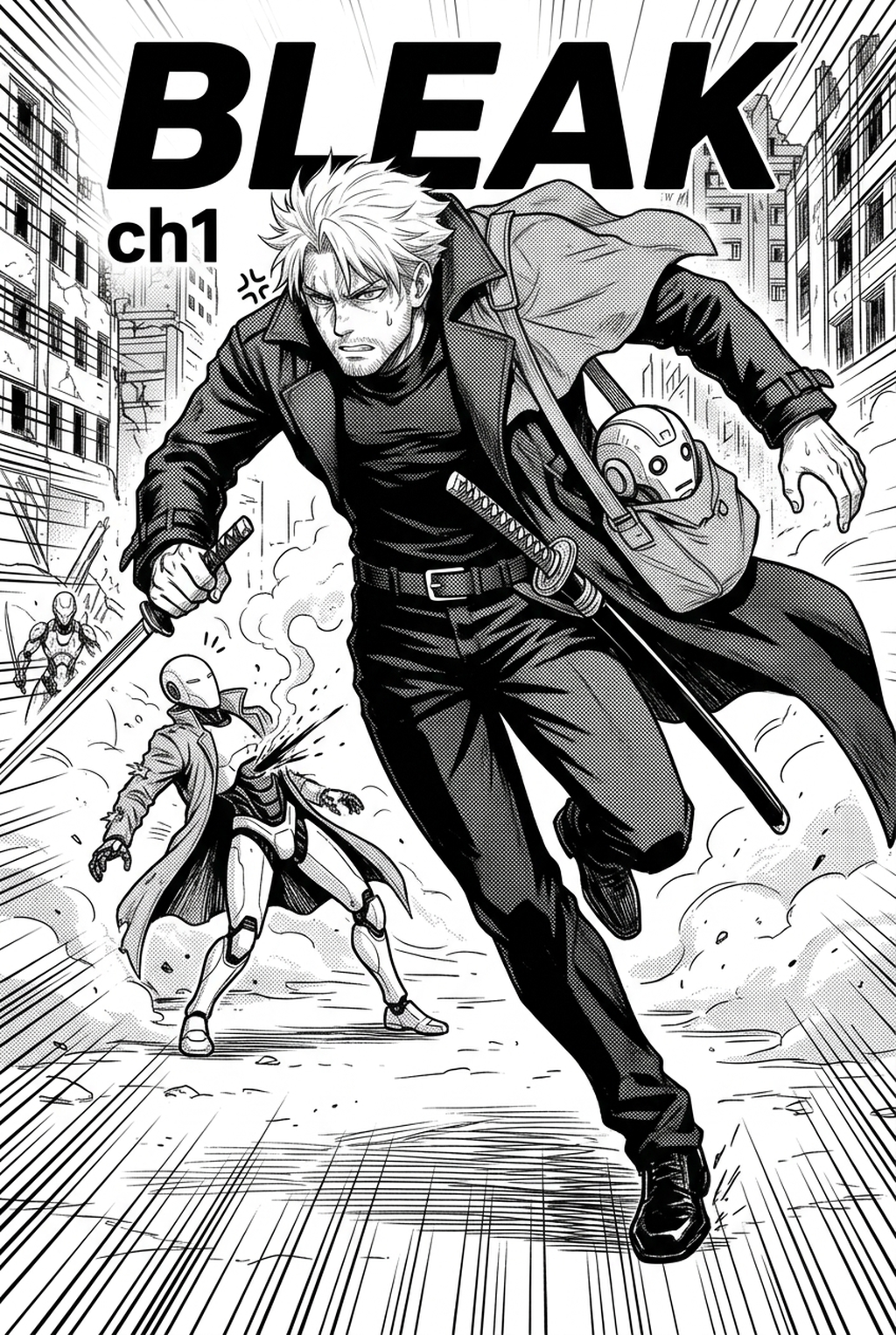
Consider a 3-page sequence where two characters engage in a sword duel. Using an AI tool, you input the core action—"Character A strikes, Character B parries, Character A retreats"—and the system generates a 9-panel layout that enforces consistent left-to-right strike trajectories. This prevents the confusion caused by "axis hopping" and ensures your final inked lines accurately depict the physical weight of the weapons.
How to Get Started with Mangaka
Speed is your most important metric during the storyboard phase, as the goal is to capture the momentum of the story rather than perfecting the art quality. This keeps the review focused on story intent, line weight, panel readability, and the export quality behind the final AI Manga Storyboard Builder output.
- Define the emotional intent: Start by noting the "visual beat" for every three panels. * Prioritize layout over art: Use rough placeholders to ensure the reading order flows logically. * Leverage AI for structure: Let the tool handle the panel spacing and gutter measurements to avoid manual errors. * Review for pacing: Look at your page sequence to ensure you aren't grouping too many high-intensity panels together.
Remember that an AI tool serves as your assistant, not a replacement for your creative direction. The structural layout is handled by the software, but the "storyboard intent"—why a panel is large or why a transition happens—remains entirely your domain as the creator.
The Bottom Line
A professional creator workflow bridges the gap between a raw script and the final, polished product by forcing you to solve pacing and narrative flow issues early. By utilizing an manga storyboard , you reduce the technical friction of drafting layouts and can focus your energy on high-impact visual storytelling. Start your next project by prioritizing the flow of your panels today.
Related articles
Create Your Manga Storyboard Fast with AI-Powered Layouts
Romantic Comedy Manga Storyboard: A Professional Guide
Start Your AI Manga Storyboard with Mangaka