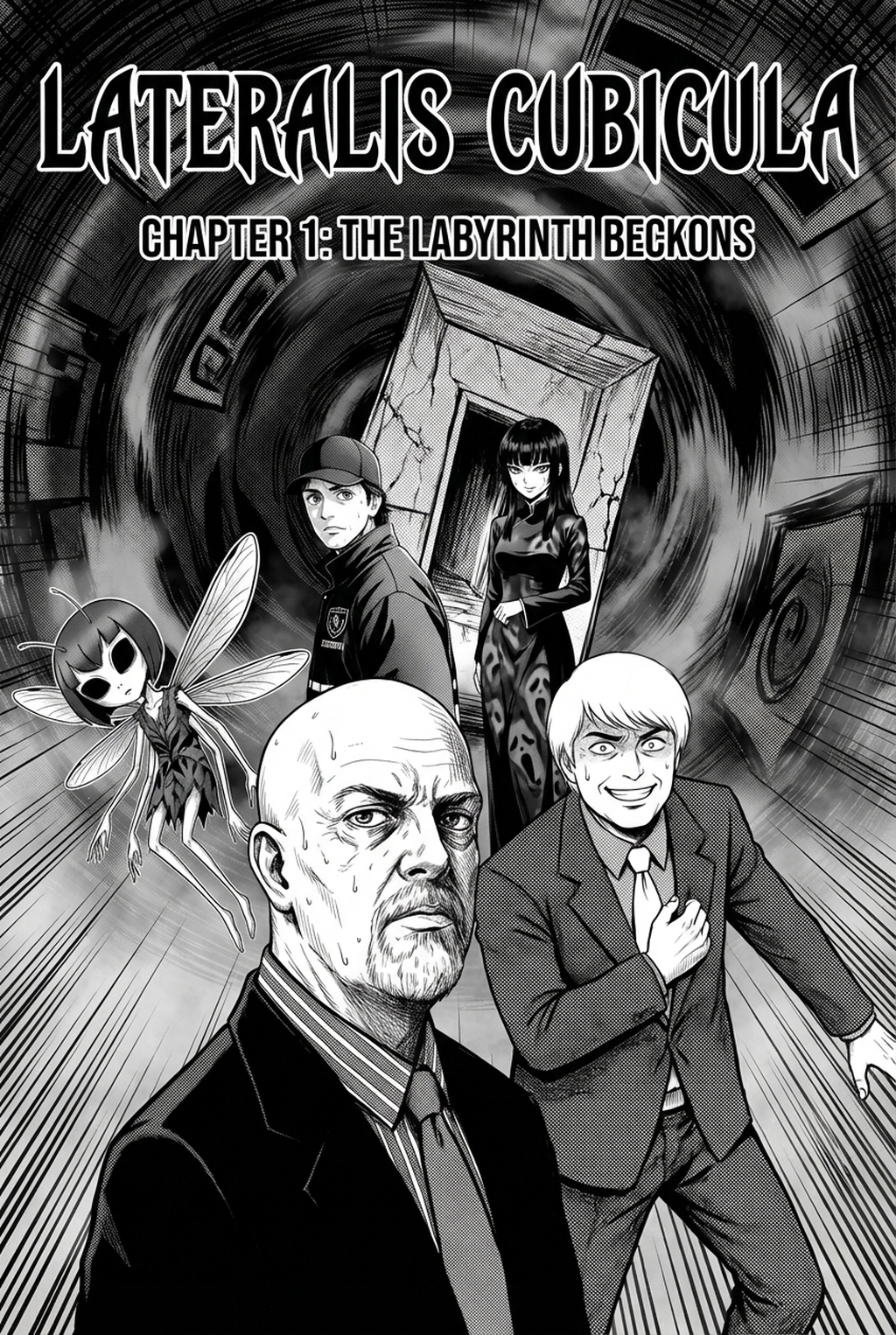
Essential Structure of the Storyboard
A manga storyboard functions as the foundational blueprint for a chapter, defining the spatial relationship between your subjects and their environment. It translates the abstract script into a tangible sequence of koma (panels) that dictates how the reader experiences your story’s pacing and emotional impact.
The storyboard is not a placeholder for finished art, but a strategic document used to organize the visual flow across a standard 18-to-24-page chapter. By treating the layout as an architectural plan rather than an illustration exercise, you move past decorative flourishes to focus on the essential movement of the eye. Prioritizing composition at this stage prevents "tangled flow," where readers lose their orientation because panel sequence logic contradicts the action’s trajectory.
Distinguishing between rough layout sketches and final inked art is the single most important habit for efficient creators. If you spend too much time on shading or fine-line details before the layout is finalized, you invite "sunk cost" bias, where you feel forced to keep a poorly paced panel just because it looks pretty. Focus purely on the structural silhouettes and basic character proportions to test if your sequence actually tells the story you intended.
Why Structural Planning Drives Creator Success
Effective storyboarding prevents pacing fatigue by balancing high-energy, action-heavy spreads with the necessary "breathing room" of quiet, dialogue-focused panels. By manipulating the visual weight of each panel, you gain direct control over the tension leading into critical page turns.
Without a clear plan, authors often encounter "dead zones" where the plot stalls because the panel density doesn't match the scene’s urgency. A storyboard allows you to identify these slow points early, letting you swap a full-page splash for a series of tight, vertical panels to accelerate the pace. This intentional manipulation of page real estate is what transforms a standard comic into a high-impact graphic novel experience.
Spatial disorientation occurs when a reader flips a page and loses track of character positioning or the direction of the action. Your storyboard ensures that if a character is moving left-to-right in panel A, their trajectory remains logically consistent as they transition into panel B. Establishing this continuity early prevents you from having to flip or mirror your finished line art, which often ruins the natural look of drawn shadows and cross-hatching.
Strategic Layout with AI Assistance
AI-driven tools allow you to offload the repetitive technical labor of panel placement while you retain complete authority over the artistic direction. By utilizing a digital builder to manage your layout, you can instantly test variations of a page without manually cropping, rotating, or resizing your assets.
Automated Spatial Management. When you define your scene composition through a digital builder, you can set fixed constraints for your gutters—the critical gaps between panels—which regulate the passage of time between narrative beats. This approach ensures that your layout remains mathematically sound, preventing the "drift" that happens when manual placement isn't aligned to a proper grid. The Mangaka AI Manga Storyboard Builder allows you to iterate rapidly on your visual narrative, ensuring your character proportions and stage directions remain consistent across the entire chapter sequence.
Using a builder provides a distinct advantage by allowing you to generate "layout proof" versions of your pages. You can see how a reader will interpret the flow before committing to hours of labor, effectively acting as your own editor during the earliest stages of the build. This eliminates the technical friction often associated with resizing layers in complex, multi-panel compositions.
Common Use Cases and Pitfalls
To maintain a professional reader experience, you must navigate the constraints of the page with extreme precision. Failing to address these common issues will result in a disjointed product that feels amateurish regardless of how high-quality your final line art looks.
- Tangled flow: Avoid ambiguous eye-pathing where the reader doesn't know which panel to read next; keep your primary action aligned along a clear, logical path. * Gutter maintenance: Treat the gutter space as a deliberate pause; narrow gutters suggest rapid, frantic motion, while wider gutters create a sense of time passing or distance. * Character continuity: Keep the character’s "stage left" or "stage right" position locked relative to the scene's background elements to avoid sudden, jarring visual shifts. * Speech-bubble clearance: Design your panel layouts with enough whitespace to accommodate dialogue, preventing text from obscuring critical art details like facial expressions or background world-building.
Implementing the Storyboard Workflow
Getting started with a professional storyboard does not require you to be a master illustrator. The goal is to articulate the narrative beats so clearly that any reader can follow the story even without dialogue or color. A common error is skipping the storyboard to jump straight into detailed inking. Aim to spend roughly 20-30% of your total chapter production time on layout; this ensures you solve all the "heavy lifting" problems while the page is still in a draft state. If you find yourself constantly erasing and redrawing final art, it is a clear indicator that your planning phase was insufficient.
AI-powered builders are excellent for managing complex page layouts that require unconventional shapes or specific overlap ratios. These tools handle the boring, repetitive tasks like grid alignment, freeing you to focus on the high-level craft of drawing dynamic, emotionally resonant panels.
Check character consistency, panel readability, line quality, and export readiness before publishing. Creators should also record why the page passed review, which panel details still need manual cleanup, and which export format the next collaborator will use. That makes the subsection useful instead of leaving a short checklist under a large heading.
The Bottom Line
A professional-grade storyboard is the difference between a chapter that flows effortlessly and one that leaves the reader confused and disengaged. By focusing on the structural backbone of your narrative before you commit to the time-intensive process of inking, you protect your vision and maximize your creative output. Use the Mangaka AI AI AI Manga Storyboard Builder workflow Builder workflow Builder to solidify your layout today and take full control over your narrative architecture.
Related articles
Mastering the Psychological Thriller Manga Storyboard 2026
Manga Storyboard: A Complete Guide to Planning Panels 2026
Start Your Manga Storyboard Fast with AI Automation in 2026