What Is Fantasy Manga Background Art?
Great background art serves as a foundational narrative anchor, establishing the specific 'sense of place' required to ground your readers in a fantasy world. It is the visual infrastructure that dictates the scale of your hero shots—often full-page spreads—versus the functional, minimalist panels required for rapid dialogue sequences.
The most effective environments rely on consistent architectural styles that define your world’s lore without needing a single word of exposition. Maintaining accurate perspective scales prevents your characters from looking like they are floating in mid-air, which happens frequently when artists prioritize speed over structural integrity.
You must strategically distribute detail so the reader’s eye naturally travels to your focal point, usually your protagonist. Over-rendering every cobblestone in a city street scene creates visual noise that competes with the expressions on your characters' faces. Professional panels utilize a hierarchy where backgrounds are rendered with slightly thinner line weights, ensuring the foreground subject remains the primary delivery format for the narrative.
Why AI Manga Background Artist Matters for Manga Creators
Consistency in environment design prevents reader confusion, as inconsistent layouts often cause a "sense of place" collapse where readers lose track of where the action is taking place. For long-running series, the ability to replicate a guildhall or a specific dungeon entrance over dozens of chapters is essential to maintaining immersion.
Maintaining thematic coherence across recurring locations like fantasy capitals or magical ruins builds a stronger sense of reality for your readers. If your character enters a tavern in chapter three, the layout and key architectural features must remain recognizable if they return in chapter twenty. Establishing these visual rules early prevents the "drifting background" problem that can pull an audience out of an otherwise well-paced story.
When you outsource the heavy lifting of environmental layout, you reduce the risk of burnout associated with high-page-count deadlines. The time saved drafting complex, multi-point perspective structures can be redirected into character expressions or perfecting your screentone application. By treating backgrounds as a distinct layer, you gain the flexibility to adjust the lighting or composition without destroying the hours already spent on character ink.
How Fantasy Manga Background Art Works with Mangaka
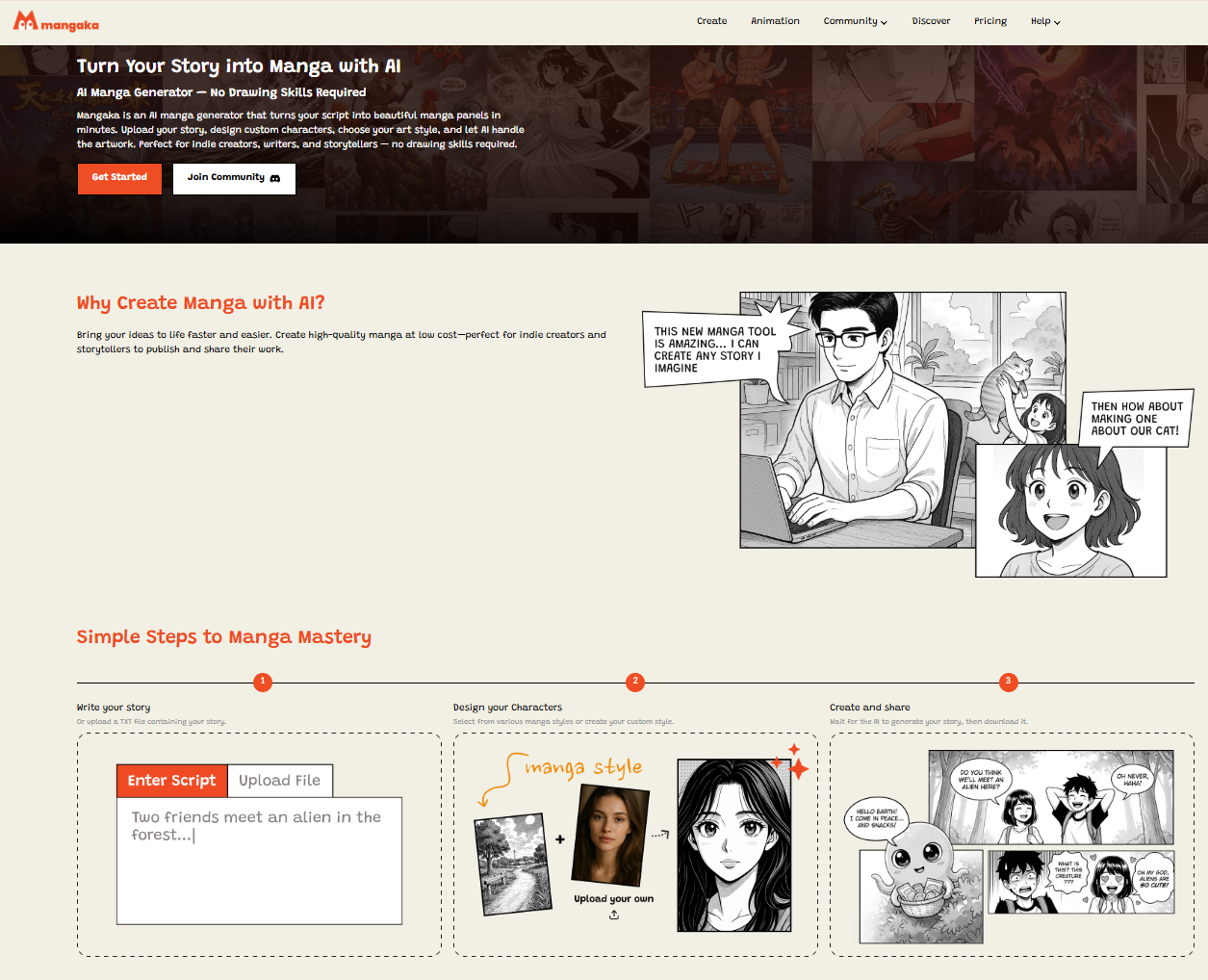
fantasy manga background art streamlines your environmental process by allowing you to generate base layouts directly from descriptive text descriptions, completely bypassing the hours usually spent on initial sketching. This tool effectively bridges the gap between a written script and a finished visual, providing a structured foundation that you can then adapt to your personal artistic voice.
You can iterate on environmental variations without ever starting from a blank canvas. If your scene requires a specific gothic ruin at sunset, you generate the base structure, refine the lighting, and decide if the architectural flourishes fit the surrounding environment in your previous panels. This is crucial for maintaining a high-fidelity visual world throughout your entire script.
Using AI-generated structures as a source context layer for your hand-drawn inking provides a hybrid approach that retains the artist's unique soul. You can trace over the generated perspective lines with your preferred digital pen or traditional brush, ensuring that the final output matches your line weight and specific aesthetic choices.
Use Cases for AI Manga Background Artist
When preparing a sequence, start by focusing on specific scene descriptions to control light sources and architectural flourishes before generating your assets. For a high-action sequence in a cathedral, you might input "high-vaulted stone arches, stained glass lighting, dusty atmosphere" to get your base plate.
- Layer Hierarchy Management: Always separate your foreground characters from the complex environmental assets on different layers. * Manual Finishing Touches: Treat generated outputs as an underlay for manual finishing, such as adding motion lines or specific combat debris. * Perspective Locking: Use the tool to ensure that complex buildings align with your established vanishing points to avoid jarring shifts between panels. * Consistency Checks: Re-use the same base architectural creative brief for all panels within a specific location to ensure environmental reliability.
How to Get Started with Mangaka
Creators often worry that using automated tools for their backgrounds will result in a generic look, but the secret lies in how you integrate the output into your existing workflow. The tool’s strength is not in providing a finished image, but in providing a technically perfect underlay that you then elevate with your own unique brush strokes and shading techniques.
- Non-human architectures: You can easily adapt styles to fit fantasy tropes like floating islands, bioluminescent caverns, or mechanical steampunk cities. * Generic aesthetics: Combat the "generic" look by applying your own custom screentones and adjusting line weights after generation. * Style synchronization: Ensure your background matches your character style by adjusting parameters for line density and contrast to match your primary character designs. * Perspective accuracy: Rely on the tool to handle the geometry of complex structures, freeing your hand for the expressive, organic curves of your character work.
The Bottom Line
creator workflow is no longer limited by your ability to draft perfect perspective grids, as modern tools allow you to augment your creativity rather than replace it. By focusing on narrative and character depth while using fantasy manga background art , you can maintain a high-fidelity visual world that keeps readers immersed from the first page to the final cliffhanger. The most successful creators use these digital assets to handle technical labor so they can dedicate their energy to the visual storytelling that only they can provide.
Related articles
Mastering Isekai Manga Background Art: A Creator’S Guide
Mastering Manga Colorist Techniques: A Creator's Guide 2026
10 Creative 4-Koma Strip Ideas for Daily Manga Creators 2026