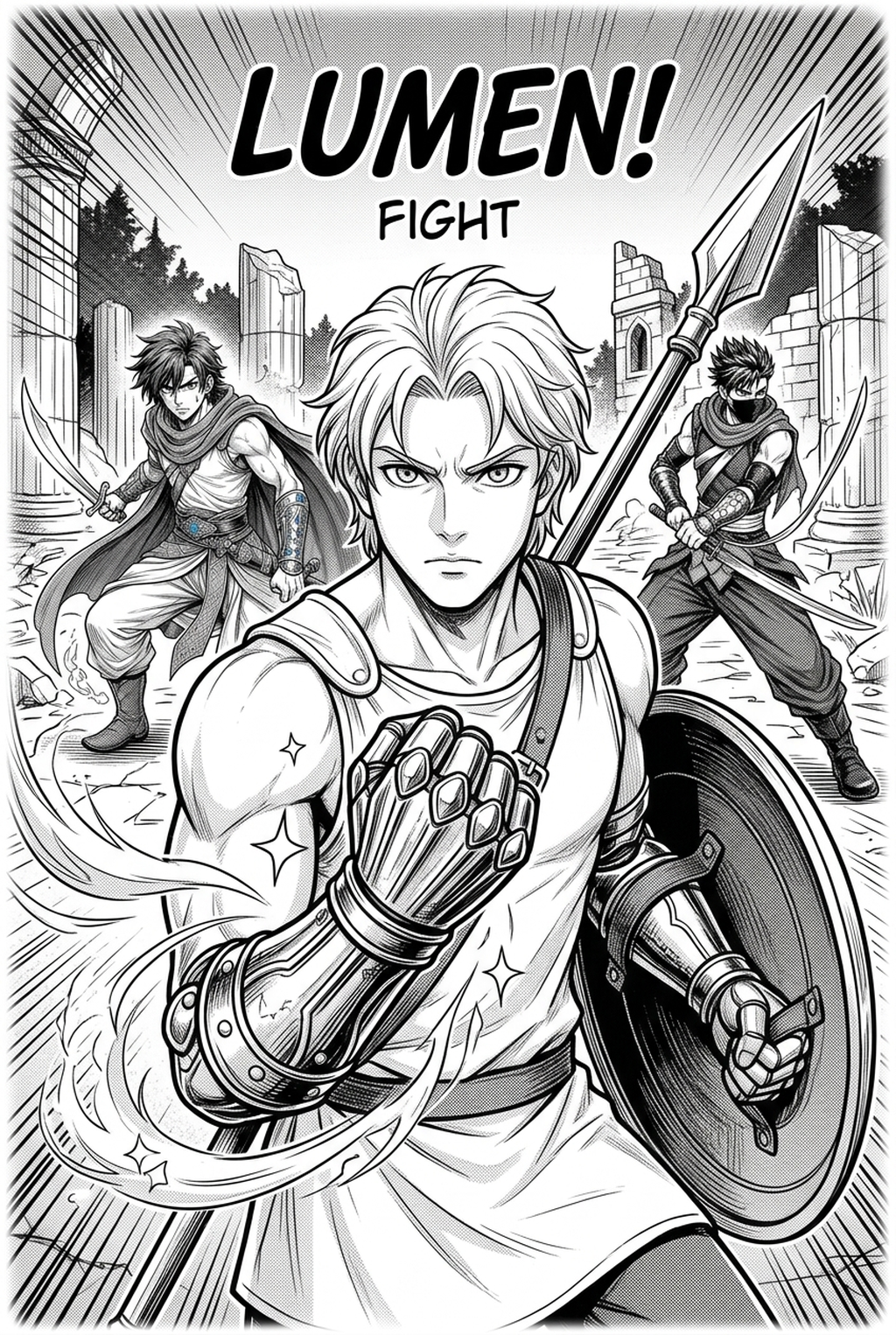
AI Manga Storyboard Builder: Defining the Visual Blueprint
A storyboard functions as the primary 'source context' for editors; without a clean board, collaborative critique on pacing becomes nearly impossible. It serves as a diagnostic tool for your narrative, allowing you to identify dead air in dialogue or overcrowded panels before you invest hours in complex brush work.
The board defines the sequence of events, ensuring that each page turn functions as a psychological hook for the reader. If your story relies on a traditional Shonen power-up or a Seinen thriller reveal, this phase is where you confirm that the climax falls on the correct side of a two-page spread.
You must solve the layout geometry early to avoid "layout monotony," where every frame is uniform. By prioritizing the structural arrangement over character anatomy, you ensure the visual weight of your art matches the script’s intensity without needing to erase entire inked pages later.
Check character consistency, panel readability, line quality, and export readiness before publishing. Creators should also record why the page passed review, which panel details still need manual cleanup, and which export format the next collaborator will use. That makes the subsection useful instead of leaving a short checklist under a large heading.
Why AI Manga Storyboard Builder Matters for Manga Creators
Effective manga pacing relies on the strategic placement of panels to guide the reader’s eye across the page and build anticipation for page turns. If you fail to adjust gutter sizes or vary panel shapes, your action sequences will feel static, regardless of how clean your character lines appear in the final export.
The most effective hooks are engineered during the storyboard phase to capitalize on the physical act of turning a page. A masterfully designed layout leaves the reader questioning the outcome of a combat sequence precisely as they reach the bottom-right corner of a left-hand page, forcing an immediate, impulsive flip to the next spread.
Creators must utilize gutter sizes to dictate the speed of reading. Thin gutters between frames suggest rapid action, while expansive white space around a character’s face forces the reader to slow down and process emotional weight. Without this deliberate modulation, your work loses its "visual vocabulary," resulting in a flat experience that fails to capitalize on the unique flexibility of the medium.
How Manga Storyboard Works with Mangaka
AI AI AI Manga Storyboard Builder workflow Builder workflow Builders streamline the technical labor by auto-arranging panels to match standard industry aspect ratios, freeing up the artist to focus on composition. Tools like manga storyboard help bridge the gap between rough sketches and polished frames by maintaining consistent narrative flow during the iteration stage.
By using automated placement, you can rapidly generate multiple layout variations for a single script to see which visual structure maximizes dramatic tension. Instead of manually drawing boxes and fighting with rulers, you allow the tool to handle the base frame geometry, ensuring your composition remains professional and structurally sound. If a page feels unbalanced, you can swap the panel sequence and re-generate the structure in seconds, rather than manually redrawing each box and adjusting your ink lines to match the new dimensions.
Use Cases for AI Manga Storyboard Builder
Veteran creators use the storyboard phase to solve "perspective errors" before they become expensive to fix during the final ink-and-tone process. It is the most effective stage to test if your wide-angle splash pages provide the necessary environmental context or if they are simply taking up space that could be better used for character-driven dialogue.
Consider a scene where a character engages in a dynamic jump. If your board identifies that the character is dwarfed by their environment to the point of losing visibility, you can shift the perspective to a low angle before spending hours on intricate cross-hatching or shading.
Imagine a 5-panel layout on page 12 of your chapter:
- Panel 1 (Wide): Establishes the setting, consuming 20% of the page. * Panel 2-3 (Square): Focuses on character reaction, taking 15% each. * Panel 4 (Vertical): Emphasizes the tension, occupying 30% of the page length. * Panel 5 (Square): The concluding punchline, rounding out the remaining 20%.
By defining these ratios in a builder, you avoid the common trap of having "drifting" panel sizes that make the final print appear cluttered or amateurish. This keeps the review focused on story intent, line weight, panel readability, and the export quality behind the final AI Manga Storyboard Builder output.
How to Get Started with Mangaka
Start by blocking out your script into the "3-act structure" per chapter, ensuring each scene serves a distinct narrative purpose. Transition to a dedicated builder tool once your rough thumbnails are finalized to ensure your dimensions conform to standard print or digital mobile-scrolling requirements.
The best boards are discarded and redrawn multiple times to optimize the flow. Do not fear the process of iterating on your layout; if a sequence does not convey the required emotion, the issue is almost certainly in the structure, not the art.
When you finalize your board, check for:
- Clear Reading Path: Does the eye follow the panels logically from top-right to bottom-left? * Dialogue Clearance: Is there room for word balloons without obscuring character faces? * Visual Weight: Are the most important panels the largest on the page?
The Bottom Line
Mastering the creator workflow is the single most effective way to improve the readability and impact of your comic series. By utilizing professional tools to handle the layout logic, you can minimize production friction and spend more time on what matters most: the story. Start your manga storyboard and see how structured panels transform your creative output.
Turn Storyboard Drafts into Publication-Ready Comics with Mangaka.app
Moving from rough thumbnail layouts to final polished manga pages requires tight continuity, balanced text placement, and reliable workflow execution. Mangaka.app bridges the gap:
- Interactive Storyboard-to-Final Page Pipeline: Layer finished pencils, clean ink strokes, and screen textures directly onto thumbnail storyboard grids.
- Dialogue Bubble Balancing: Automatically calculate speech balloon sizes and position text to avoid obscuring vital character expressions or focal points.
- Chapter-Wide Style Consistency: Keep line weights, screentone frequencies, and panel margins perfectly uniform across all pages in a serialization run.
- One-Click Tankōbon Compilation: Export fully paginated PDF and archive bundles ready for digital distribution or traditional manga editors.
Ready to elevate your serialized manga and speed up chapter production? Create your professional manga storyboard and character sheets on Mangaka and transform your creative workflow today.