AI Manga Background Artist: Defining the Afro-Futurist Aesthetic for Panels
Afro-futurism in manga synthesizes ancestral cultural markers with high-spec technological landscapes to create a distinct narrative identity. This aesthetic relies on "techno-traditionalism," where the organic curves of West African architecture coexist with the hard-edged, glowing data streams of a cyberpunk future.
Visual storytelling within this genre demands careful management of two specific design nodes:
- Ancestral Motifs: Integration of patterns like Adinkra or Nsibidi scripts within the structural supports of floating sky-ships or city gates. * Bio-Mechanical Tech: Landscapes characterized by vibrant, glowing cyber-purples or deep blues that contrast sharply with earthy ochre color palettes.
The most successful designs utilize the golden ratio to anchor these dense, futuristic elements without overwhelming the reader's eye. Failing to harmonize these components results in cluttered panels where the environment competes with the character for focus, often forcing a reader to pause and decode the page layout rather than following the story’s natural flow.
Why Cultural World-Building Defines Reader Retention
Your background acts as a silent narrator that establishes the socio-political state of your world before a single dialogue box is read. If your character’s costume design—perhaps featuring intricate tribal-inspired gear or heavy metallic plating—does not share the same visual language as their environment, the reader experiences a cognitive dissonance that breaks immersion.
Maintaining a uniform aesthetic across chapters is the single largest hurdle for solo creators. When you jump from a wide-angle market square to a tense close-up in a high-tech lab, inconsistent line weight or lighting values will betray the lack of a cohesive world. By documenting a visual style sheet—recording which specific neon hues, material textures, and architectural shapes represent your series' region—you lock in the environmental baseline, allowing you to focus on the emotional beat of the scene rather than re-inventing the physics of your world for every new page.
How the Background Generation Workflow Functions
AI tools fundamentally shift the production burden by allowing you to generate perspective-accurate, high-fidelity environments directly from detailed scene descriptions. Instead of spending six hours inking a complex, brutalist cityscape, you input specific stylistic modifiers—such as "glowing fractal patterns" or "matte-finish Kente textile accents"—to produce an environment that complements your character's inking style.
This workflow removes the need for tedious cross-hatching of complex structures, ensuring your background maintains its integrity even during extreme wide-angle perspective shifts. You are not sacrificing artistic control; you are shifting it from the physical act of drawing lines to the conceptual act of directing the scene’s light and structure. Maintaining Afro-futurist manga background design with Mangaka becomes a matter of saving your specific creative brief parameters as a preset, ensuring that the heavy tech-nodes in chapter one look identical to the ones featured in the climax of chapter twelve.
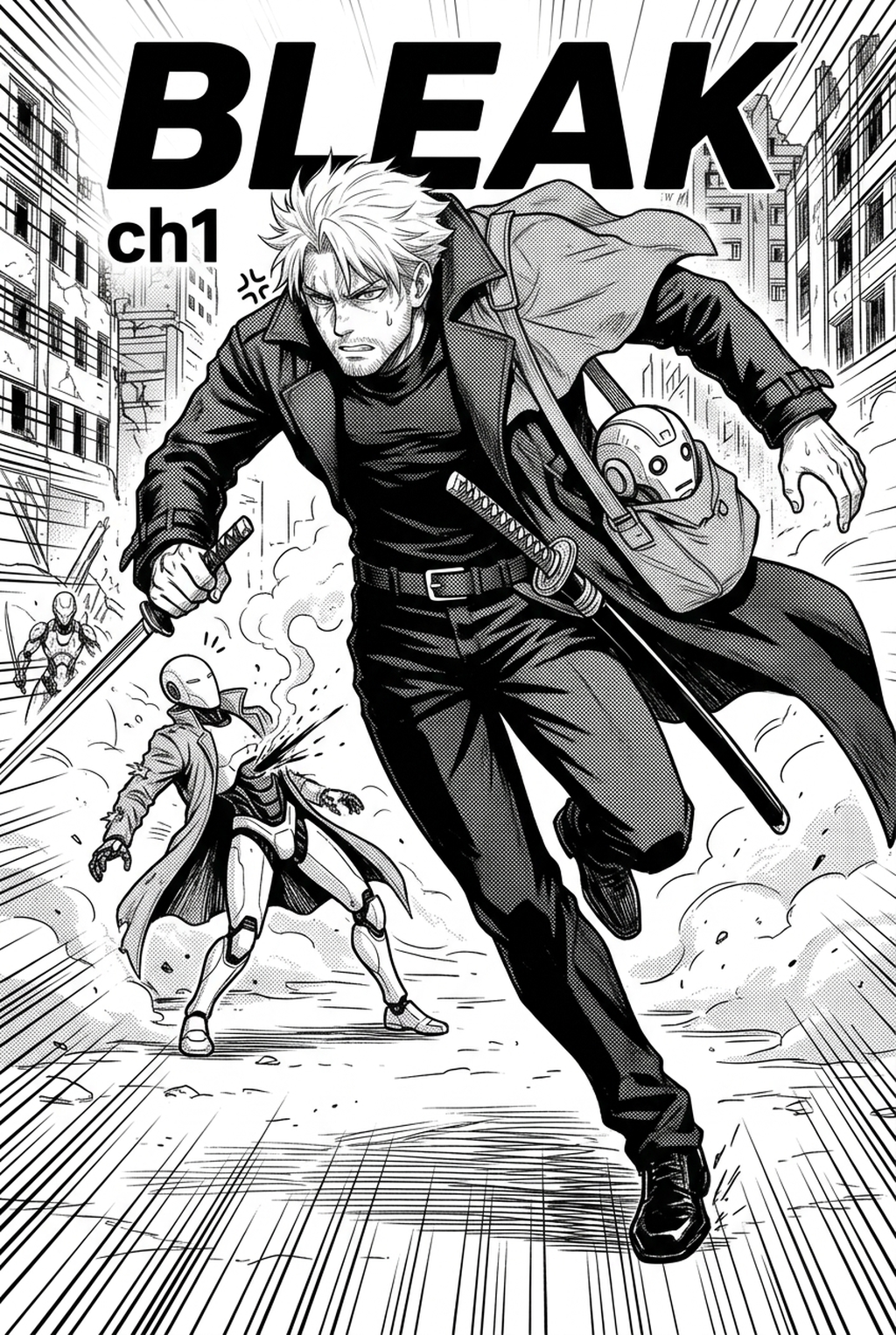
- Chapter cadence. Use the AI pass for pages where speed matters most, such as repeated action poses, transformation beats, or dense speed-line panels. Keep manual cleanup for hero panels where the line style defines the emotional peak.
- Character continuity. Compare the generated lines against the same model sheet, costume notes, and facial-expression range used during sketching. This prevents a fast inking pass from drifting away from the character identity readers recognize.
- Export readiness. Check whether the final manga output can move into lettering, coloring, or final layout without rebuilding panel borders or speech-bubble space. A good manga workflow should save time while keeping the next production step predictable.
Strategic Use Cases for Environmental Density
The most compelling Afro-futurist compositions rely on layering organic natural topography with hyper-advanced, clean-lined metallic structures. You can manipulate the contrast between glowing, ephemeral data streams and matte, hand-crafted textures to emphasize the technological disparity between your factions or regions.
Consider these three practical applications for your design process:
- Silhouette Preservation: Use lighting effects to ensure that characters with intricate hair or complex tribal gear pop against the dense, geometric background rather than blending into the patterns. * Focus Point Anchoring: Position glowing motifs on the periphery to draw the reader's eye toward the central action of the panel. * Environmental Storytelling: Integrate ancestral statues or monoliths within the base of futuristic tech hubs to signify the deep historical timeline of your manga world.
If you are drafting a page where the hero enters a tech-hub interior, test the scene with varying overhead and eye-level views to see how the environmental density changes the perceived scale of your protagonist. By iterating through these perspective variations before you ink your final character lines, you ensure that the background amplifies the drama rather than obscuring your action.
Getting Started with Professional Background Tools
, Kente, Nsibidi, or specific regional architecture) you want to repeat across the setting. * Test Perspective: Execute wide shots and extreme close-ups to confirm that your chosen textures scale appropriately across different panel sizes. * Scale the Workflow: Once your creative briefs for the market square are perfected and match your character’s style, move to more complex interiors to solidify your chapter-wide production rhythm.
Creators should compare the generated line art with the original sketch and confirm that facial expressions, props, speed lines, and speech-bubble space still support the scene. A repeatable review pass should cover character consistency, panel readability, background clarity, and whether the final file is ready for coloring, lettering, or editor feedback. For longer projects, creators should save approved examples of line weight, face detail, clothing folds, and background density. Those references keep later chapters closer to the intended style.
The Bottom Line
Mastering AI Manga Background Artist workflow enables you to craft immersive, culturally resonant worlds that significantly enhance your narrative impact. By integrating specialized production tools like Afro-futurist manga background design into your creative production process, you bypass the manual drudgery of perspective drawing and focus entirely on the aesthetic cohesion of your manga world.
Related articles
Analyzing Naruto Manga Character Design for 2026 Artists
Afro-Futurist Background Art: A Guide for Manga Creators
Manga Colorization: How to Color Pages While Saving Art 2026