AI Manga Storyboard Builder: Defining the Shoujo Narrative Structure
Effective shoujo design prioritizes 'character-space' or ma to emphasize interpersonal depth over rapid, plot-dense transitions. This approach dictates that the whitespace surrounding a character is as significant as the character's line art itself, providing the necessary breathing room to convey romantic tension or lingering melancholy.
Conventional grid layouts fail in shoujo because they prioritize mechanical sequence over the slow, rhythmic cadence required for emotional payoff. By utilizing bleeding-edge panels that extend to the page border, you can remove the perceived boundaries of the character's world, creating a sense of expansiveness that anchors the reader in the protagonist's internal state.
Internal monologues in shoujo often demand a larger, circular or irregular panel shape that disrupts the standard flow. These oversized frames act as a pause button, forcing the reader to linger on a facial expression or a subtle gesture, which is a hallmark technique for emphasizing the unsaid emotions driving the scene.
Essential Pacing for Manga Creators
Rhythm in a shoujo storyboard is determined by the reader's eye path, which must be carefully managed to sustain a dreamy, shimmering aesthetic. If you cram too many action-heavy panels onto a single page, the delicate, ethereal atmosphere dissolves into clutter, effectively killing the romantic tension you are trying to build.
The most potent moments in shoujo occur in the reaction shots—a lingering panel on the protagonist’s eyes or the slight tremble of a hand. These sequences should be storyboarded to maximize the space they occupy, ensuring they appear as focal points that disrupt the standard left-to-right reading flow, thereby forcing a slower, more emotional engagement.
To maintain the signature look of the genre, avoid structural congestion by limiting your panels to a maximum of four or five per page. This creates an airy, open feel that supports the use of intricate floral or pattern motifs later in the inking phase, preventing the visual elements from competing with your character's emotional trajectory.
Managing Workflow with Mangaka
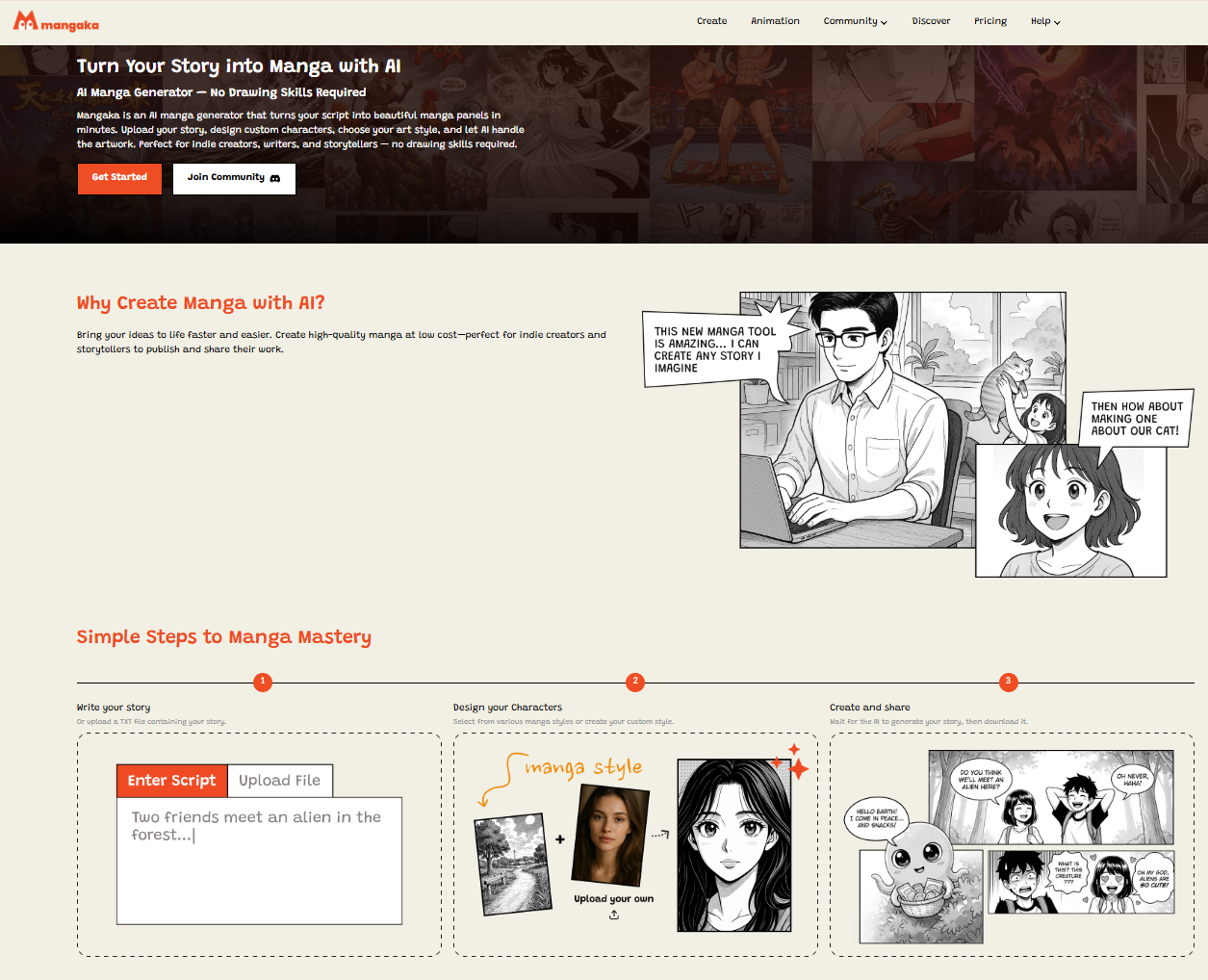
shoujo manga storyboard with Mangaka streamlines your creative workflow by automating the structural layout, ensuring the reader is guided through the narrative arc without the need for repetitive manual trial-and-error. You define the emotional tone of the scene, and the system intelligently arranges the panel sequence to support that specific, airy flow automatically.
By offloading the technical constraints of panel arrangement to an AI-driven tool, you recover significant time to focus on the expressive details that define your style. You can input your narrative beats and receive a clean, optimized structure that allows for the integration of complex, style-specific motifs, such as gradient overlays or textured background patterns, without sacrificing page readability.
Creating a page with five intersecting, unconventional panels usually requires extensive measurements to ensure the bleed and gutter spacing remain consistent. A digital tool handles these technical constraints, providing a perfectly aligned template that serves as a foundation for your line art, ensuring that even complex, overlapping compositions remain intuitive for the reader.
- Chapter cadence. Use the AI pass for pages where speed matters most, such as repeated action poses, transformation beats, or dense speed-line panels. Keep manual cleanup for hero panels where the line style defines the emotional peak.
- Character continuity. Compare the generated lines against the same model sheet, costume notes, and facial-expression range used during sketching. This prevents a fast inking pass from drifting away from the character identity readers recognize.
- Export readiness. Check whether the final manga output can move into lettering, coloring, or final layout without rebuilding panel borders or speech-bubble space. A good manga workflow should save time while keeping the next production step predictable.
Practical Use Cases for Page Composition
Over-complicated panel arrangements often lead to reader confusion, especially when multiple overlapping elements are involved. The most successful storyboards keep the narrative path clear by utilizing strong eye-lines that connect characters across the page, ensuring the emotional continuity is never broken by an awkward or erratic transition.
Failing to balance negative space often results in a page that feels cramped and heavy, which directly contradicts the airy, shimmering visual language characteristic of shoujo. You should aim for a deliberate distribution of white space, using it to highlight emotional isolation or the intimacy between characters during crucial dialogue exchanges.
When placing characters in adjacent panels, ensure their eye-lines align to maintain the perceived space between them. For example, if your protagonist is looking to the right in the first panel, the person they are addressing should be placed to the left in the subsequent, connecting panel, creating a seamless visual bond that keeps the reader immersed.
Getting Started with Professional Tools
You do not need to be a master of architectural composition to create professional-grade storyboards. Modern AI-assisted tools manage the structural flow of your page, allowing you to focus entirely on the emotional beats and character-driven moments that truly matter to your readers.
AI-driven tools handle the technical layout, providing a clean, empty canvas that is perfectly prepared for your specific decorative motifs. Once the structure is set, you can easily apply the delicate, flowery overlays and subtle tones that give shoujo its unique, dreamy visual identity, knowing the underlying composition is sound.
Professional creators often need to refine machine-generated layouts to fit unique scene requirements. You retain full control over these layouts, with the ability to adjust the automatic flow to better suit your artistic vision, whether that involves pulling a panel to the edge of the bleed or adding extra space for a dramatic, full-page reveal.
The Bottom Line
Mastering your storyboard is the most critical step in ensuring your shoujo manga resonates with readers on an emotional level. By adopting modern AI-assisted workflows, you can eliminate the technical friction of paneling and focus entirely on the delicate, character-driven storytelling that defines the genre. shoujo manga storyboard and accelerate your creative workflow today.
Related articles
Manga Storyboard: A Blueprint for Visual Narrative Flow 2026
What Is a Manga Storyboard? Mastering Your Panel Layouts
Manga Storyboard Guide: Master Narrative Flow and Layouts