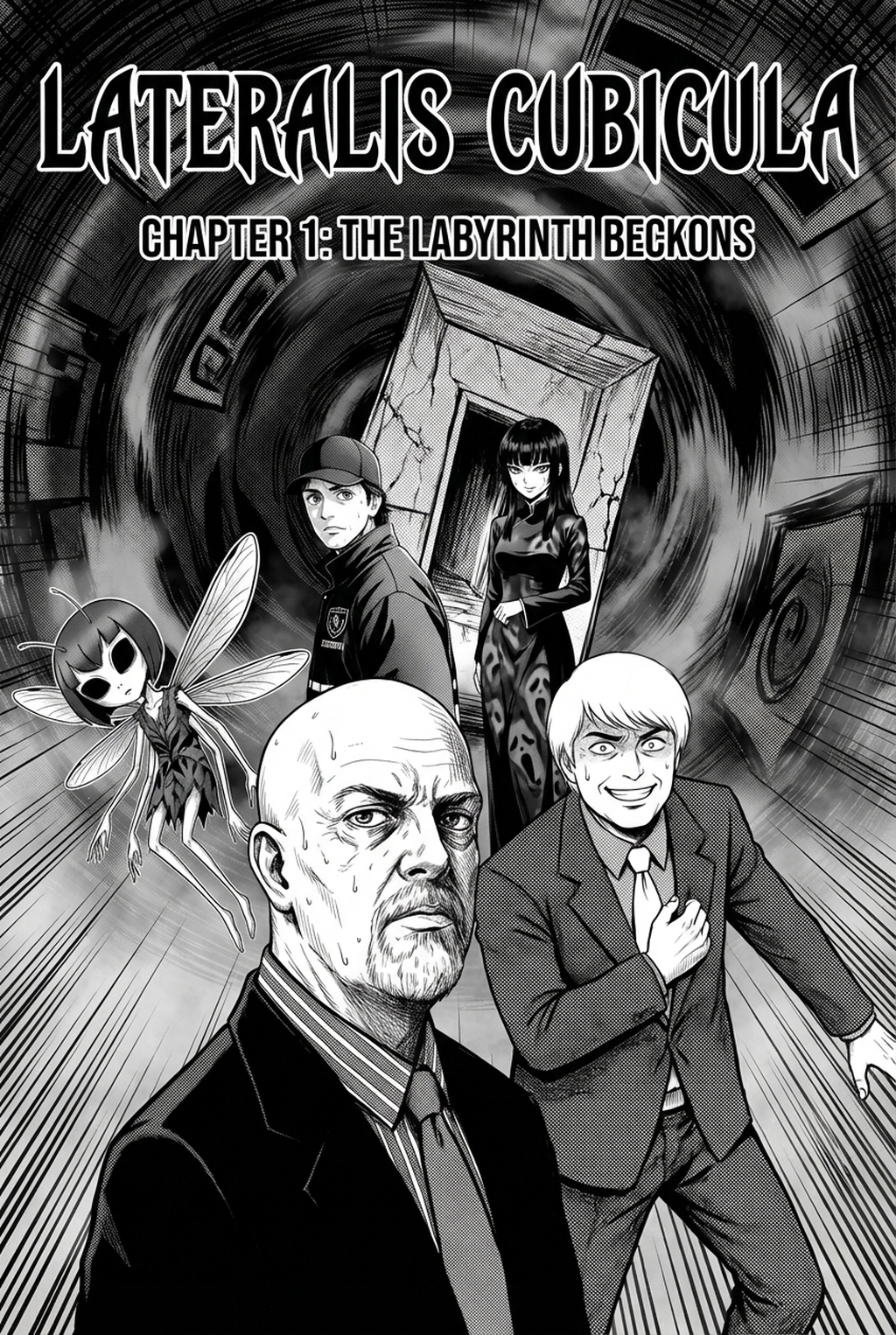
AI Manga Storyboard Builder: Why This Format Changes Creator Output
The move to 3D spaces forces a re-evaluation of how you define the relationship between a reader and the story. You are no longer designing for a static page layout but for a dynamic user experience where the review owner must manually test every transition to prevent disorientation.
When a reader finishes one panel, their orientation in 3D space will likely differ from their starting point, creating a continuity break. If you fail to design "soft-landing" points between scenes—where the next panel appears directly in the user’s center of focus—you run the risk of losing the viewer in empty virtual space.
The gutter has traditionally served as the universal signal for a jump in time or location, but in 3D space, this function is replaced by environmental barriers. Using a shift in lighting or an architectural divide between panels acts as a more intuitive guide than relying on a blank space. This method allows you to lead the reader's eye through a scene using the environment itself, rather than forcing them to rely on abstract spacing conventions that don't translate into a virtual coordinate system.
Designing with the AI Manga Storyboard Builder
The VR manga storyboard with Mangaka removes the technical friction of manual spatial positioning by automating the complex math required for 3D panel arrays. By processing your initial script and character sketches, the system calculates the ideal field-of-view (FOV) for every beat, ensuring your artwork remains undistorted regardless of where the reader looks.
The tool handles the heavy lifting of converting your layered art into a format ready for VR head-mounted displays. It resolves the common issue of line-weight drift, where fine ink details become blurry during the final rasterization process, by sharpening the vectors specifically for the pixel density requirements of common VR hardware.
You can input your story beats and let the tool organize the panel placement based on narrative intensity. If a scene requires a high-impact reveal, the system scales the focal point to pull the viewer into the frame, preventing the loss of visual hierarchy that occurs when you manually attempt to space panels in a non-linear 3D interface.
Strategic Use Cases for Creators
The most effective VR stories use spatial anchors to keep the reader grounded even during disorienting action. By locking panels into the viewer’s peripheral vision, you can signal that a secondary event is occurring without forcing them to break their primary focus, maintaining the momentum of the fight choreography.
Implementing text that adjusts its size based on the reader’s distance ensures that whispers feel intimate and shouting feels overwhelming. If your dialogue bubbles remain static while the user navigates the scene, you lose the ability to use proximity as a tool for emotional pacing, resulting in a flat experience that fails to capitalize on the 3D medium.
Integrated haptic cues allow you to signal significant reveals or character transformations through more than just sight. By tying your storyboard to sensory feedback triggers, you create a deeper engagement level that traditional print or vertical comic platforms simply cannot replicate.
Check character consistency, panel readability, line quality, and export readiness before publishing. Creators should also record why the page passed review, which panel details still need manual cleanup, and which export format the next collaborator will use. That makes the subsection useful instead of leaving a short checklist under a large heading.
Starting Your First Project
Designing for this format does not require coding skills or a background in 3D rendering. The transition from your existing 2D skillset is bridged by automated tools that interpret your creative brief and output a structured, navigable experience.
- vertical comic platforms: Use a vertical-scroll orientation that relies on a single, continuous line of action. * VR Manga: Utilizes a spherical or room-scale orientation, where the reader inhabits the scene rather than observing it from a fixed distance. * Conversion: Transforming existing 2D work is exceptionally difficult because it requires a manual re-mapping of every panel's spatial coordinate to prevent perspective warps.
You don't need a game engine or an advanced programming background to see your story in 3D. The AI handles the coordinate mapping, leaving you to focus on the emotional stakes of the panels themselves. You are essentially shifting from the role of a page-designer to a stage-director for your own manga characters.
Creators should compare the generated line art with the original sketch and confirm that facial expressions, props, speed lines, and speech-bubble space still support the scene. A repeatable review pass should cover character consistency, panel readability, background clarity, and whether the final file is ready for coloring, lettering, or editor feedback.
Creators should save approved examples of line weight, face detail, clothing folds, and background density. Those references keep later chapters closer to the intended style. For collaboration, creators should mark which panels are final and which panels still need redraws. Clear status labels prevent an assistant, editor, or colorist from polishing the wrong version.
The Bottom Line
VR manga storyboarding is a blend of cinematography and classic graphic narrative that demands a new approach to panel placement and focal depth. By utilizing advanced AI tools to manage the spatial geometry, you can eliminate the technical hurdles that previously made this format inaccessible to independent creators. Focus your energy on the emotional pacing and character consistency, and let the VR manga storyboard handle the complex spatial layout for your next project.
Related articles
Crafting a Compelling Fantasy Adventure Background for 2026
Build Your Manga Storyboard for Youth Comedy Instantly 2026
What Is a VR Manga Storyboard? A New Way to Plan Panels 2026