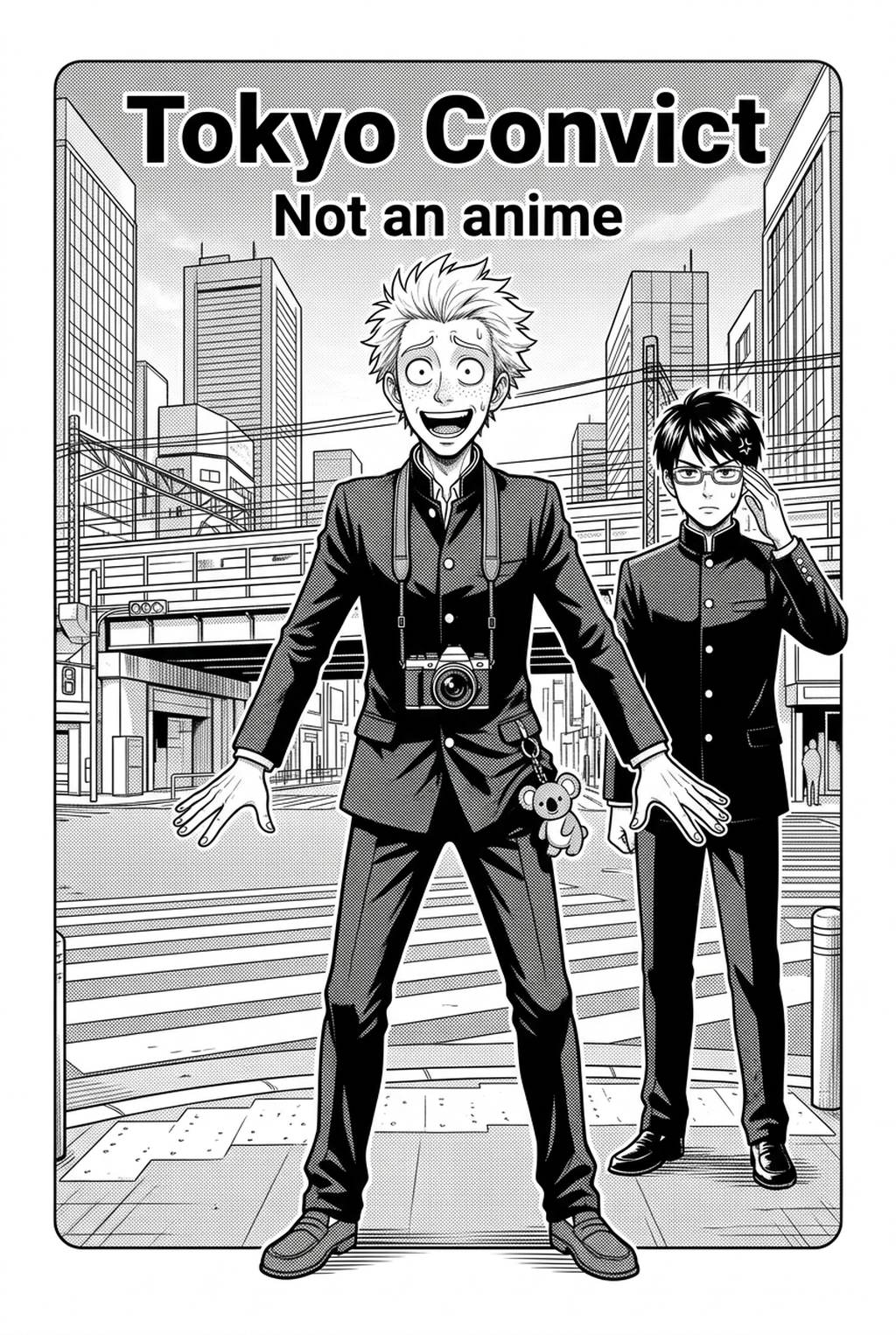
Defining the Visual Identity of Your Manga Cast
Character design functions as the visual syntax of your narrative, using silhouette, costume, and distinct facial landmarks to convey personality before a single word of dialogue is read. Successful designs rely on high readability, ensuring that a reader can identify your lead protagonist in a chaotic, high-action splash page even when the art is reduced to heavy shadows or minimalist inking.
Designers must prioritize how a character behaves across various panel scales. A design that relies on intricate belt buckles or complex cuff embroidery may suffer from loss of fidelity when scaled down to a half-page panel or a mobile-first vertical comic platforms format.
- Silhouette clarity: A character should remain instantly recognizable through their outer shape alone, avoiding cluttered shapes that bleed into the background gutters. * Scalability tiers: Ensure your character retains primary identity markers like hair spikes or shoulder width when drawn at 25% or 10% of full-page resolution. * Visual hierarchy: Use accessory placement and line weight to guide the reader’s eye toward the character's face, preventing the reader from getting lost in overly noisy costume details.
Why Consistency Matters in Serialized Production
Consistency remains the primary obstacle for solo creators who must maintain character integrity over hundreds of pages while battling fatigue or style shifts. You must document your character’s construction through a rigid model sheet that maps facial geometry from front, three-quarter, and profile views.
Drift occurs when subtle, unanchored features change shape over time, such as eye-shape elongation or inconsistent scar placement. Creators can combat this by designating 'Reference Anchor Points'—essential, repeatable details that serve as the technical foundation for every panel.
- Fixed iris patterns: Establish a specific dot or highlight layout for eyes that does not vary, even during emotional expressions. * Weapon and accessory coordinates: Define the exact orientation of signature items, such as a sword hilt or utility pouch, to prevent spatial displacement errors. * Volume-based proportions: Use a fixed-height ratio—such as a 7-head-tall measurement—as a permanent constraint for every full-body shot to stop accidental stature shifting.
Technical Implementation with Mangaka
Mangaka functions as an intelligent style-guide, enabling creators to input precise descriptive constraints that enforce visual bounds across multiple panel generations. By offloading the mechanical reproduction of these anchor points to AI, you can dedicate more time to narrative pacing and panel composition without the fear of manual drawing errors.
Utilizing Design Seeds for Repeatable Output. The tool allows you to utilize specific 'Design Seeds'—stable, technical strings that lock in the core anatomy and stylistic signatures of a character while allowing the system to adjust lighting or perspective. You can character design with Mangaka to test how these seeds preserve your character’s essential look during dramatic lighting shifts or complex action poses.
- Model locking: Prevent style-drift by defining specific clothing sets or physical quirks that the tool maintains as "immutable" across every generation. * Consistent base states: Save weeks of production time by using generated base models for background characters or secondary cast members who require less artistic investment than the lead. * Refinement loop: Use the generation output as the foundation for your hand-drawn refinements, ensuring your final inked lines are always built upon perfectly proportional skeletons.
Common Workflows and Industry Use Cases
Efficient production demands a structured flow starting from silhouette exploration and moving toward color palette testing. Traditional manual design workflows often bottleneck at the character-refinement stage, where multiple revisions are required to harmonize a new costume with the existing art style.
By maintaining a library of generation variations, you can iterate on seasonal costume changes or "power-up" states without re-inventing the character’s base anatomy from scratch. This method, often called Design Versioning, allows for rapid deployment of new visual states while keeping the underlying technical specs in alignment.
- Silhouette prototyping: Rapidly generate fifty potential silhouettes to identify which shape communicates the desired personality best before committing to detailed inking. * Palette harmonization: Quickly cycle through varied color schemes to test how your character’s palette interacts with specific background environments or lighting moods. * Action-range testing: Use generation to verify how your character’s specific gear looks in active, motion-heavy poses to catch potential design failures like clashing accessories.
Starting Your Design Journey with Mangaka
You can address the technical challenges of manga production by shifting your focus toward architectural consistency. This keeps the review focused on story intent, line weight, panel readability, and the export quality behind the final AI Manga Character Designer output.
- Maintaining proportions: Rely on fixed-reference assets or generative anchors to enforce strict visual boundaries rather than guessing the length of a limb on every page. * Preserving artistic voice: Use AI to handle the heavy lifting of structural repetitive labor, which ensures that your personal creative vision and unique emotional expression remain the central focus of the work. * Prioritizing the silhouette: Keep the primary character silhouette simple enough to read in a quarter-second glance, as the rapid pace of manga consumption demands instant visual clarity.
Creators should compare the generated line art with the original sketch and confirm that facial expressions, props, speed lines, and speech-bubble space still support the scene. Creators can use each revision decision to clarify panel readability, character consistency, and export quality before publishing or sharing.
The Bottom Line
Mastering AI Manga Character Designer workflow ensures your manga remains visually cohesive and legible, even during high-paced serialization. By leveraging professional design tools to manage your structural consistency, you free yourself to focus on the storytelling and composition that make your work stand out. Start refining your next character iteration by using the AI character designer to maintain perfect visual integrity from the first sketch to the final export.
Related articles
Automate Your Manga Inking: Start Your Free Trial Today 2026
Create Professional Character Sheet Designs Instantly 2026
Manga Character Design: A Guide for Consistent Art in 2026