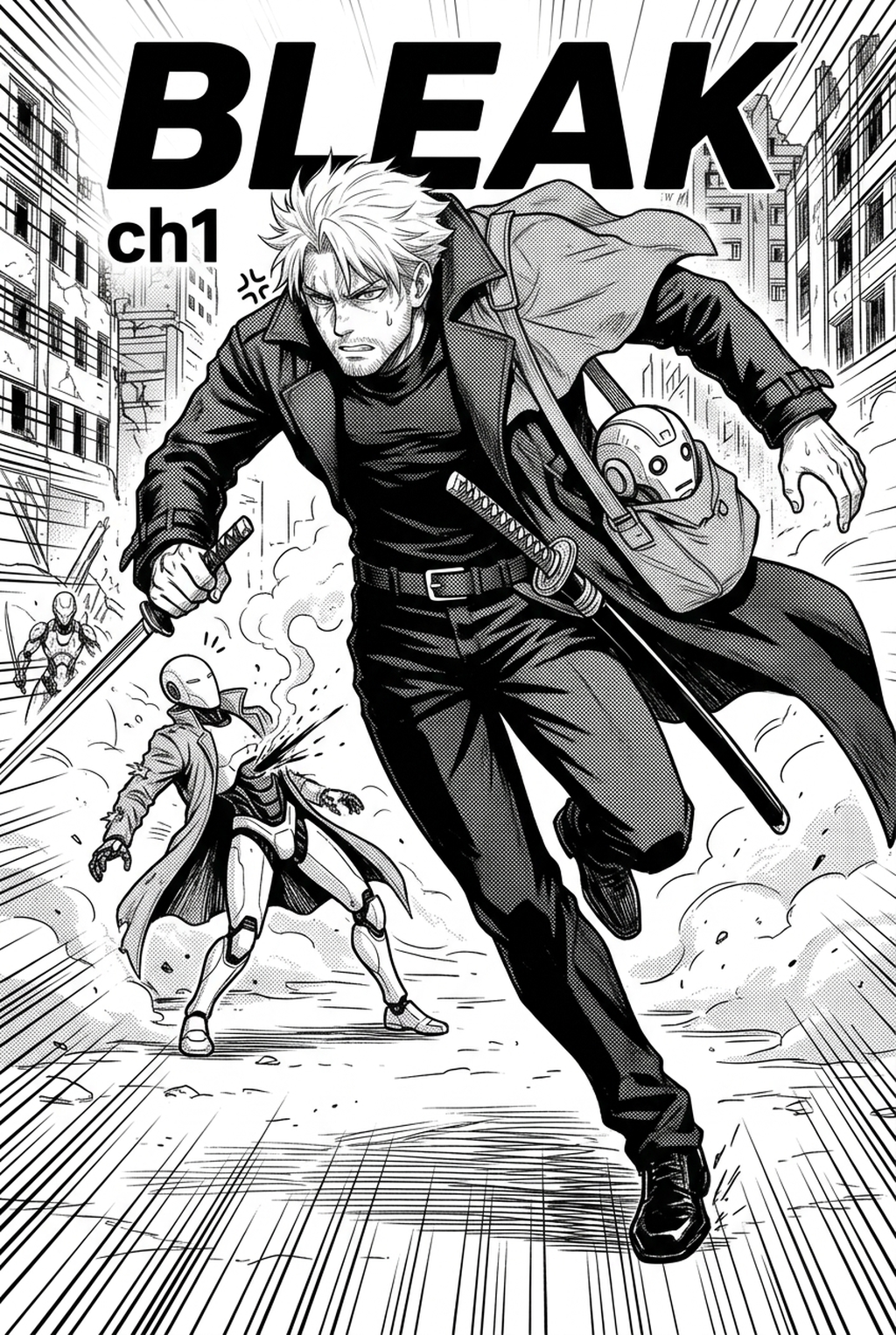
Understanding the AI Manga Background Artist Role
High-quality background elements serve as the essential stage for your narrative, providing necessary spatial context without overwhelming the reader’s focus. An effective scene relies on balanced 'white space' and precise screen-tone application to separate the foreground character from the architectural environment.
| Component | Manual Method | AI-Assisted Workflow |
|---|---|---|
| Perspective Grid | 1-2 hours per panel | Instant generation |
| Ink Weight | Variable, requires constant focus | Consistent across layers |
| Tone Density | Manual masking/filling | Auto-calculated depth |
To achieve a professional finish, you must manage your 'ink economy' by ensuring that your background lines do not compete with your character's silhouette. If a background is too dense or lacks a clear vanishing point, the reader’s eye will drift away from the central character interaction, breaking the flow of the story.
Why AI Manga Background Artist Matters for Manga Creators
Solo creators often hit a production wall when hand-drawing multiple interior settings that require rigid, rule-of-three perspective grids. This manual process is notorious for causing line-weight drift, where the consistency of your ink lines suffers as you rush through repetitive architectural details to meet a publication date.
Environmental storytelling requires more than just filling a panel with shapes; it demands that the background acts as a silent narrator that informs the reader about the world. When you scale from a simple two-page preview to a full serialized chapter, the lack of a standardized asset library becomes the primary driver of creator burnout.
You need to maintain spatial realism while keeping the page layout clean and readable. By relying on manual geometric layouts, you are essentially gambling with your production timeline, risking missed updates or subpar inking quality on the pages that matter most to your audience.
How Manga Background Works with Mangaka
AI-based generation functions by translating your specific textual scene descriptions into high-fidelity, production-ready panels that skip the wireframe stage entirely. Instead of struggling with complex perspective tools, you can input a descriptive request to define the environment's mood, architectural style, and camera angle.
This AI AI Manga Background Artist workflow Artist workflow artist tool provides a specialized workflow that prioritizes the 'manga aesthetic' over generic digital painting styles. By automating the shading and perspective mapping, you regain the creative bandwidth to focus on character performance and panel pacing. Because the AI is tuned for page-ready output, you avoid the common pitfall of 'computer-generated' clashing, where digital-looking environments ruin the organic feel of your hand-inked characters.
You gain total control over the environmental design by adjusting specific parameters that align with your series’ genre, whether you are building a gritty cyberpunk metropolis or a delicate fantasy village. These settings allow you to define the density of line work and the placement of shadows to ensure the result blends seamlessly with your existing character design.
Consistency is the hardest variable to manage when producing monthly chapters. By using a specialized engine to handle your environmental assets, you ensure that the architecture in panel one matches the perspective in panel ten without requiring you to redraw or manually track vanishing points across every page.
Use Cases for AI Manga Background Artist
You start by drafting a rough storyboard that outlines the necessary viewpoint for your scene. Once you have a clear plan, you use the AI to generate the environmental elements, specifically focusing on refining the ink weight so it feels like a natural extension of your character art. When the generation is complete, you composite these elements into your digital software of choice. This final step allows you to place your hand-drawn character overlays directly onto the generated scene, ensuring the composite feels cohesive and professional.
- Establishment shots: Use wide angles with high architectural density to introduce a new location to your readers. * Intimate interactions: Dial back the background detail and focus on soft tone usage to highlight the character’s emotional state. * Dynamic action scenes: Utilize motion-blurred environments that maintain structural integrity even during high-speed combat.
- Chapter cadence. Use the AI pass for pages where speed matters most, such as repeated action poses, transformation beats, or dense speed-line panels. Keep manual cleanup for hero panels where the line style defines the emotional peak.
- Character continuity. Compare the generated lines against the same model sheet, costume notes, and facial-expression range used during sketching. This prevents a fast inking pass from drifting away from the character identity readers recognize.
- Export readiness. Check whether the final manga output can move into lettering, coloring, or final layout without rebuilding panel borders or speech-bubble space. A good manga workflow should save time while keeping the next production step predictable.
How to Get Started with Mangaka
To begin, simply input a detailed scene description that covers the architecture, lighting, and environmental tone. If your scene requires a specific interior design, describe the furniture arrangement and lighting sources clearly to help the engine accurately map the perspective.
The primary advantage here is the removal of the wireframe phase, which is typically the most time-consuming part of setting up a new panel. You no longer need to spend hours calculating vanishing points, as the system does this automatically based on your camera angle description.
Whether you are writing a high-fantasy epic or a modern-day school drama, you can customize the architectural style by specifying textures, materials, and era-appropriate details. This ensures that your world-building remains internally consistent, reinforcing the immersion for your audience without requiring you to become an expert in historical architecture.
The Bottom Line
Mastering the creator workflow does not require you to spend your entire career bent over a drafting table struggling with rulers. By adopting a modern workflow, you can handle the most repetitive architectural tasks with professional-grade automation, leaving you more time to develop the plot and characters that your readers love. Focus on the core of your narrative, and let intelligent tools provide the world-building environments needed to bring your vision to life. manga background today and see how much time you save on your next chapter.
Related articles
How to Use an AI Manga Colorist to Speed Up Your Workflow
How to Use AI Manga Background Art to Speed Up Production
AI Manga Background Artist: A Guide for Indie Creators 2026