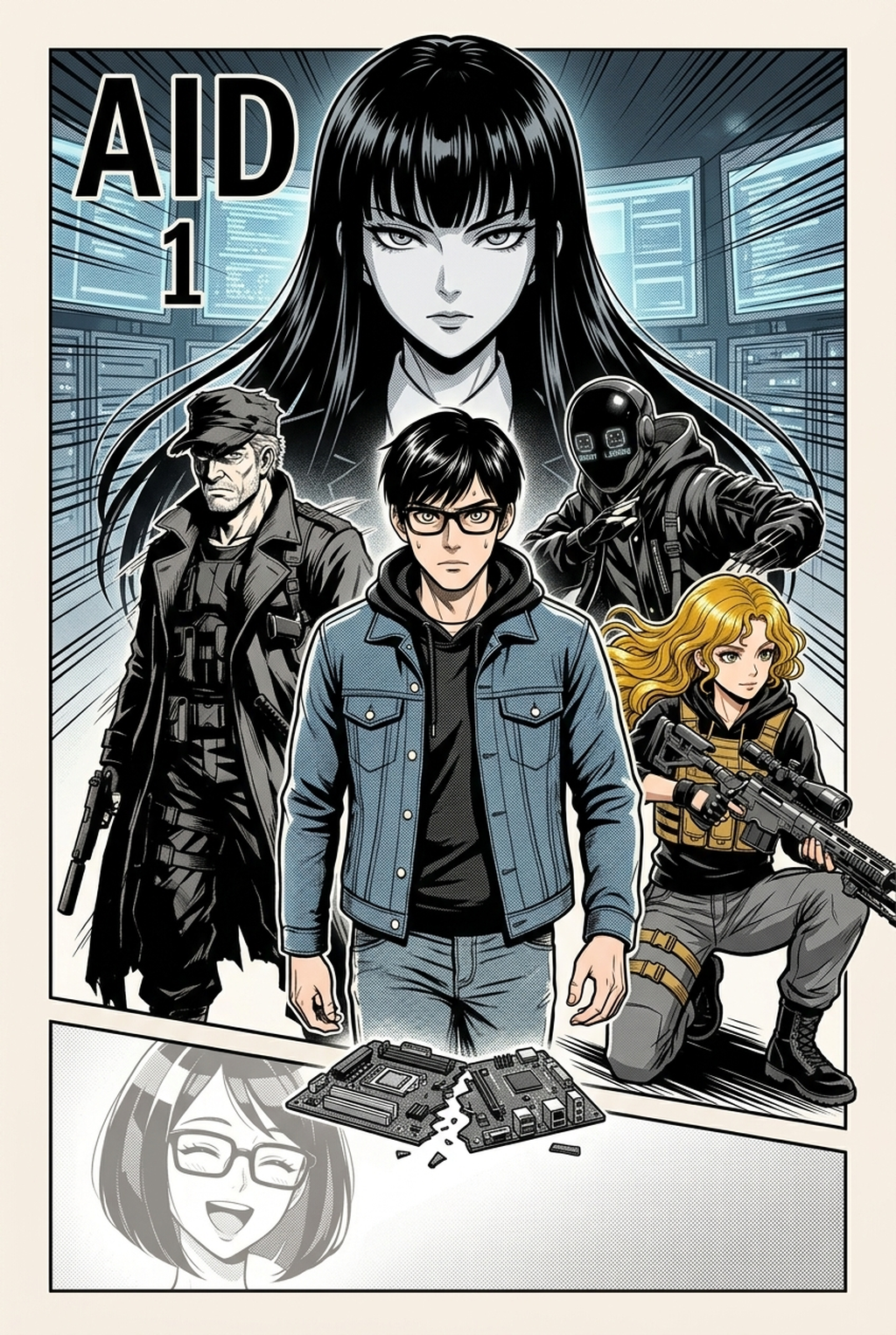
AI Manga Style Transfer: Understanding the Supernatural Visual Language
The core of this aesthetic lies in high-contrast chiaroscuro, where the interaction between deep black ink-bleed textures and stark white negative space dictates the intensity of the otherworldly presence. Creators often struggle with balancing these extremes, as too much shadow can lose the character's form, while too little removes the sense of dread or awe required for supernatural narrative beats.
Visual consistency relies on established rules for how the spirit realm intersects with the human world. These rules dictate the reader's immersion and prevent the "uncanny valley" effect that occurs when supernatural elements feel detached from the physical environment of the panel.
- Ink-bleed textures: Use dense, organic splatter patterns around entities to suggest a lack of physical boundaries and a corruption of the surrounding space. * Surreal geometric backgrounds: Apply non-Euclidean shapes to break the horizon line, signaling to the reader that the physical laws of the setting have been suspended. * Distorted anatomy: Elongate limbs or shift center-of-gravity points in spirit entities to distinguish them from the grounded, proportional human cast.
Visceral horror requires a messy, scratchy line weight that implies decay and instability, whereas action-supernatural relies on crisp, fluid strokes that suggest speed and high-frequency energy. Blurring these two styles can lead to reader confusion, where a high-stakes combat encounter feels unintentionally sluggish or claustrophobic.
Why This Aesthetic Matters for Independent Creators
Atmosphere keeps the reader grounded in the impossible; when the supernatural manga art style breaks due to inconsistent inking, the reader's suspension of disbelief fails entirely. For an independent creator juggling a thirty-page monthly cycle, the manual labor required to maintain a "spectral" look across hundreds of panels is the single greatest bottleneck in production.
If your character's demonic aura changes its rendering intensity between page five and page fifteen, the narrative momentum collapses. Consistency anchors the story, turning abstract, terrifying threats into a tangible, recognizable visual terminology that the reader understands intuitively without needing additional exposition.
Creating Spectral Imagery with Mangaka
Mangaka utilizes algorithmic style transfer to re-render your rough input sketches into the high-contrast, supernatural aesthetic, saving hours of manual inking while ensuring line-weight fidelity. You can treat the application as a bridge between your messy creative brief and the final, print-ready page layout.
Use varying line weights to separate the human realm from the spirit realm, ensuring your protagonists appear stable while entities feature glitch-like, broken strokes. By isolating these elements on distinct layers, you can apply specific digital screentone gradients to simulate spirit mist or miasma without overwhelming the foundational ink-heavy base layer.
You should implement a "corruption threshold" in your character designs, where the density of your cross-hatching increases in direct correlation with the character’s supernatural exertion. When a character taps into a spirit reservoir, use specific layer-blending modes to overlay glowing aura effects that interact realistically with foreground objects. This ensures the magical element feels woven into the scene rather than floating on top of the composition.
Practical Applications for the Supernatural Style
Using supernatural manga art style allows you to automate the tedious inking of complex spirit designs, letting you dedicate your limited time to perfecting composition and panel pacing. Instead of spending five hours hand-inking a single high-density background, you can process your layout in seconds.
- Maintaining composition: Preserve the exact spatial relationship of your original layout while injecting the required high-contrast aesthetic. * Rapid prototyping: Generate three or four variations of a spirit entity's design to see which aligns best with the tone of your current story arc. * Consistent inking: Apply a uniform "spirit" filter across disparate panels to ensure that even if the drawings were completed on different days, the final exported page remains cohesive.
Getting Started with Your Supernatural Workflow
Supernatural art does not require specialized hardware, as modern cloud-based rendering manages the heavy computational load. Because you are using your own unique sketch inputs as the source context, you avoid the "generic" look often associated with automated tools, ensuring the final page remains a reflection of your original storyboard.
- Hardware requirements: Since the rendering happens in the cloud, you can process complex, high-resolution pages on a standard laptop or tablet. * Color compatibility: You can apply these styles to both black-and-white monochrome pages and full-color spreads, depending on your preferred delivery format. * Avoiding generic output: Always prioritize your hand-drawn input as the primary constraint; the system is designed to amplify your specific line work, not replace your artistic intent.
Creators should compare the generated line art with the original sketch and confirm that facial expressions, props, speed lines, and speech-bubble space still support the scene. A repeatable review pass should cover character consistency, panel readability, background clarity, and whether the final file is ready for coloring, lettering, or editor feedback. For longer projects, creators should save approved examples of line weight, face detail, clothing folds, and background density. Those references keep later chapters closer to the intended style.
- Chapter cadence. Use the AI pass for pages where speed matters most, such as repeated action poses, transformation beats, or dense speed-line panels. Keep manual cleanup for hero panels where the line style defines the emotional peak.
- Character continuity. Compare the generated lines against the same model sheet, costume notes, and facial-expression range used during sketching. This prevents a fast inking pass from drifting away from the character identity readers recognize.
- Export readiness. Check whether the final manga output can move into lettering, coloring, or final layout without rebuilding panel borders or speech-bubble space. A good manga workflow should save time while keeping the next production step predictable.
The Bottom Line
Mastering a creator workflow is an exercise in managing contrast and maintaining visual consistency across long-form page layouts. By leveraging high-tech tools to handle the repetitive inking labor, you reclaim the creative freedom to focus on the pacing and composition that define your unique story. Start your next storyboard session by defining your spirit intensity levels and using supernatural manga art style to iterate your page designs quickly.
Related articles
Maid Character Design: A Guide for Manga Artists in 2026
Maiden Manga Character Design: A Complete Guide 2026
Creating Supernatural Manga Backgrounds: A Creator’s Guide